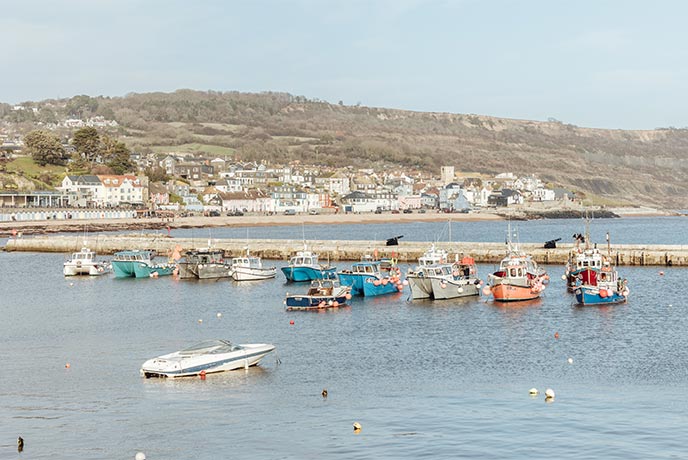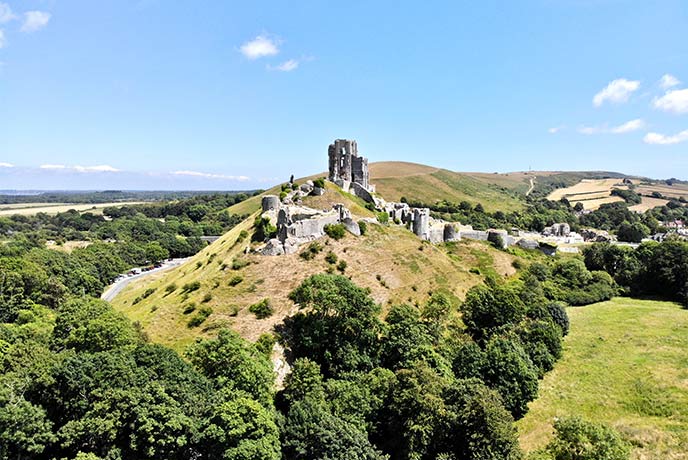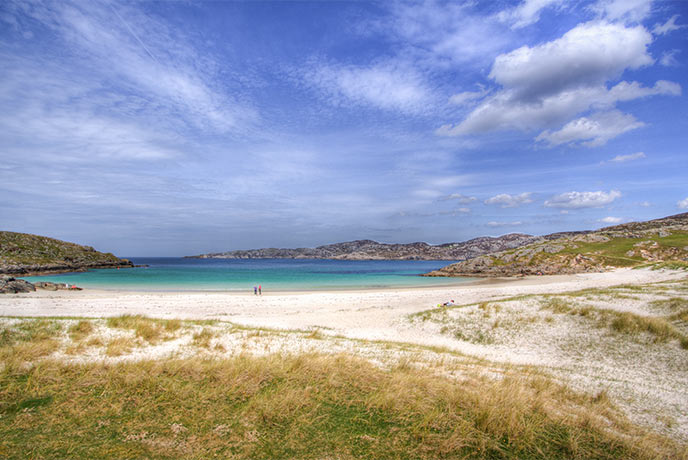
As an island, the United Kingdom is blessed with over 12,429km of coastline, with the most stunning scenery meeting the Atlantic Ocean, the North Sea, the Celtic Sea, the Irish Sea and of course, the English Channel.
From rugged cliffs and tranquil, secluded coves to bustling seaside towns and hardworking fishing harbours, Britain’s coast is a captivating tapestry well worth exploring. With the sea such a focus for the Brits, it’s no surprise that we have a rich maritime history and a passionate relationship with the sea.
Those that call this salt-flecked space home have created hamlets, villages, towns and even cities that gloriously encompass both land and sea, from amazing places to eat (hello, fresh seafood), fabulous coastal paths, and beach hut-lined beaches to historic harbours, iconic piers, and seawater swimming pools.
It’s no surprise then that we flock to the coast throughout the year, whether for a spot of storm watching while wrestling hot, salty, vinegary chips from paper wrappings in winter, following a flower-lined coastal path in spring, basking on the beach in the height of summer or delving into a Sunday lunch in a pub overlooking a harbour in autumn.
Whenever you’re planning to visit the coast, here are our top picks of the best coastal destinations in the UK…
South West
The Jurassic Coast, Dorset
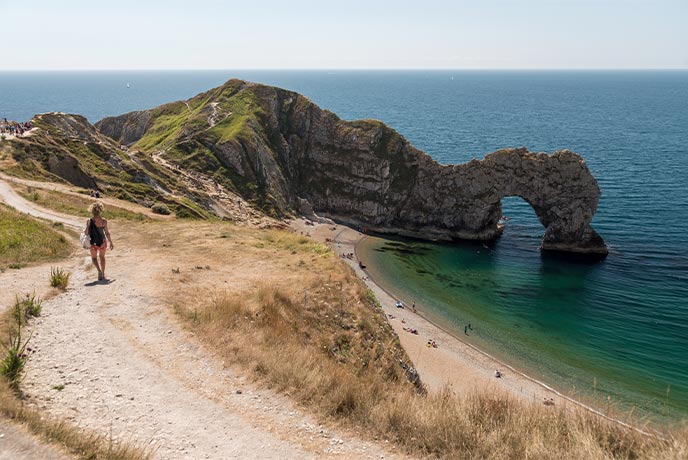
Running about 95 miles from East Devon to Dorset, this stretch of coastline is most famous for its astonishing geology and beautiful scenery. A UNESCO World Heritage Site, there are so many incredible spots to visit, but highlights include Durdle Door, a limestone archway created naturally by the sea, and nearby Lulworth Cove. With spectacularly calm waters and a sandy beach, it’s oh-so-popular for a lazy day by the sea. Or, should you wish to soak up the views while on the move, the coastal path above beckons for one of the most beautiful dog walks in the country (both beaches are dog-friendly, too).
Another natural spectacle can be found along the coast near Swanage. Old Harry Rocks, a series of chalky sea stacks standing perilously out to sea, offers incredible views as you stroll along and look out over the English Channel. If you’re into fossil hunting, head to the beaches around Lyme Regis, where, after a stormy night, you can follow in the footsteps of fossil hunter Mary Anning and search for ammonites.
Another must-visit is Chesil Beach, an 18-mile shingle beach that runs from the mainland to the Isle of Portland, which boasts starkly beautiful views, while Brownsea Island, just off the coast near Poole, is a wildlife sanctuary that’s home to a large colony of red squirrels.
Porthcurno and the Minack Theatre, Cornwall
Let’s be honest, Cornwall is all about the coast, and it’s very hard to pinpoint the best places to visit when there are so many amazing spots to choose from. So for Cornwall, we’ve opted for the unusual, and there’s nowhere that fits that description more than the iconic Minack Theatre.
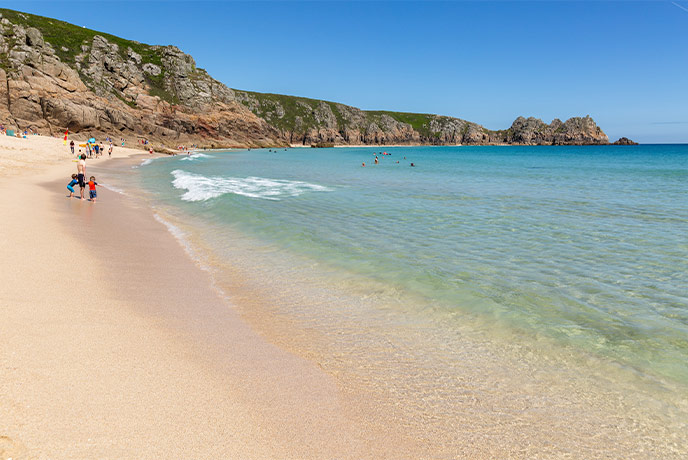
Located in the far west of the county, this astonishing alfresco theatre huddles up close among the cliffs overlooking the sea and gorgeous Porthcurno Beach below. Built by the formidable Rowena Cade from 1932 until her death at age 89, the Minack is her legacy, from the hand-carved stone seats to the beautiful stage below, all backed by the ever-changing sea.
If you can, book yourself a ticket to see a show for an unforgettable experience, but if you can’t, don’t worry, the theatre is open to explore when there’s nothing on - just remember to book ahead of your visit.
While here, take time to go down to the beach below. Porthcurno is one of the prettiest beaches in Cornwall, with its powder-soft sand, turquoise sea, and towering granite cliffs. It’s well worth stopping off for a swim and a picnic, while the Porthcurno Telegraph Museum is a fascinating visit, taking a look into the history of telecommunications.
North Devon Coast National Landscape, Devon
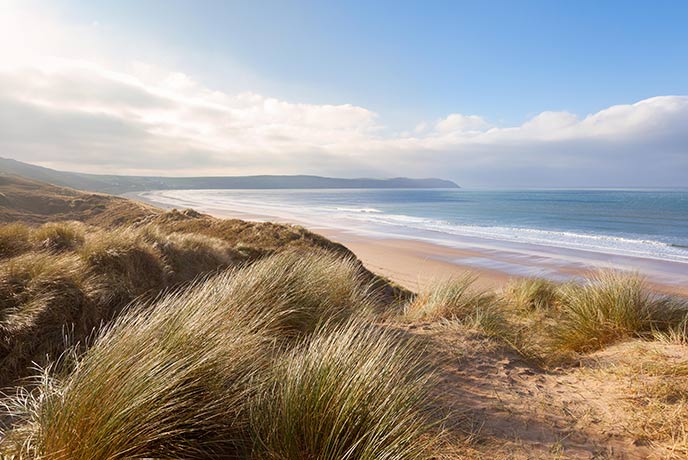
The North Devon Coast National Landscape winds its delightful way along 66 miles of beautiful coastline, passing such gorgeous places as Combe Martin, Croyde, and Woolacombe, as well as unique landscapes such as the Hartland Peninsula and Braunton Burrows, which is a UNESCO World Biosphere Reserve.
From rolling clifftop plateaus to craggy outcrops, and undulating dunes to wild, unprotected beaches, the scenery along this stretch is as majestic as it is important. Home to diverse, important flora and fauna such as marsh orchids (to be found at the dunes of Braunton Burrows), it’s also the setting for the UK’s first World Surfing Reserve.
The seaside towns and villages along here are stunning too, such as Clovelly, which is much-loved for its cobbled streets, quaint charm, flower-decked whitewashed cottages and idyllic views. Woolacombe, meanwhile, has 3 miles of award-winning beaches that are fantastic for surfing, while Lundy Island, just off the coast, is a protected site and home to puffins, dolphins, seals and small sharks.
Another stunning seaside village is Combe Martin, which lies between the coast and the wilds of Exmoor National Park. With a sheltered cove and great rockpools to explore, it’s a lovely spot for families (and nearby Newberry Beach is dog-friendly all year), while Little Hangman and Great Hangman, the highest sea cliffs in England, are a wonderful challenge for walkers, with rewarding views at the top.
South East
Cowes, Isle of Wight
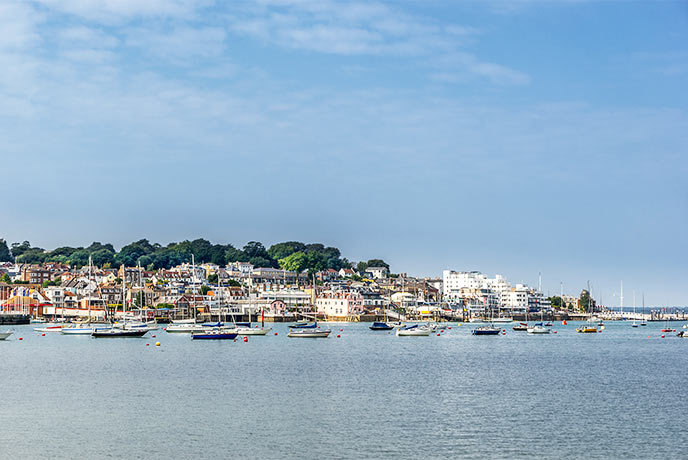
Cowes on the Isle of Wight is considered to be the jewel of the Island by many. Beloved by boat folk for the numerous prestigious yacht clubs, River Medina, and yacht festivals, most notably Cowes Week (the largest sailing regatta of its kind in the world, with over 7,000 competitors), it’s the place to see and be seen. The town is split in two by the river, with Cowes and East Cowes offering plenty of things to do.
In Cowes, take a stroll along the parade and esplanade towards Gurnard, where you can gaze over the Solent and watch the hustle and bustle of the harbour, before uncovering the history of the town at the Cowes Maritime Museum. Alternatively, jump on the ferry and head over to East Cowes, where you can take a peek into the life of royalty at Queen Victoria’s former royal palace, Osborne House, built under the supervision of Prince Albert. The town has a great selection of independent and boutique shops to frequent, while there's a plethora of excellent places to eat too, from cute cafés to bijoux restaurants, whether you’re after a light bite or a good old-fashioned Sunday roast.
The Seven Sisters, East Sussex
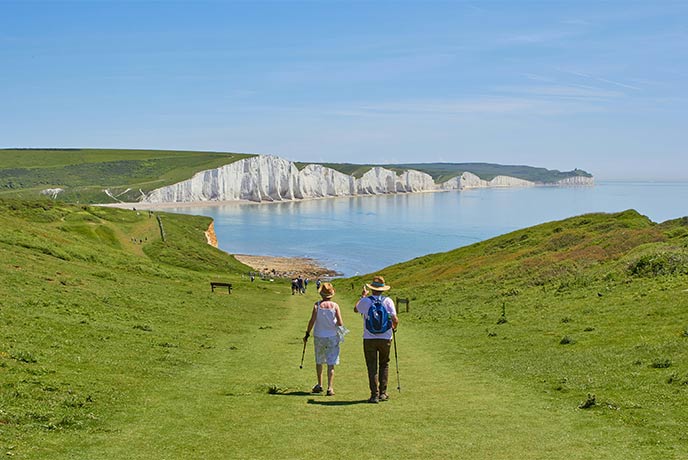
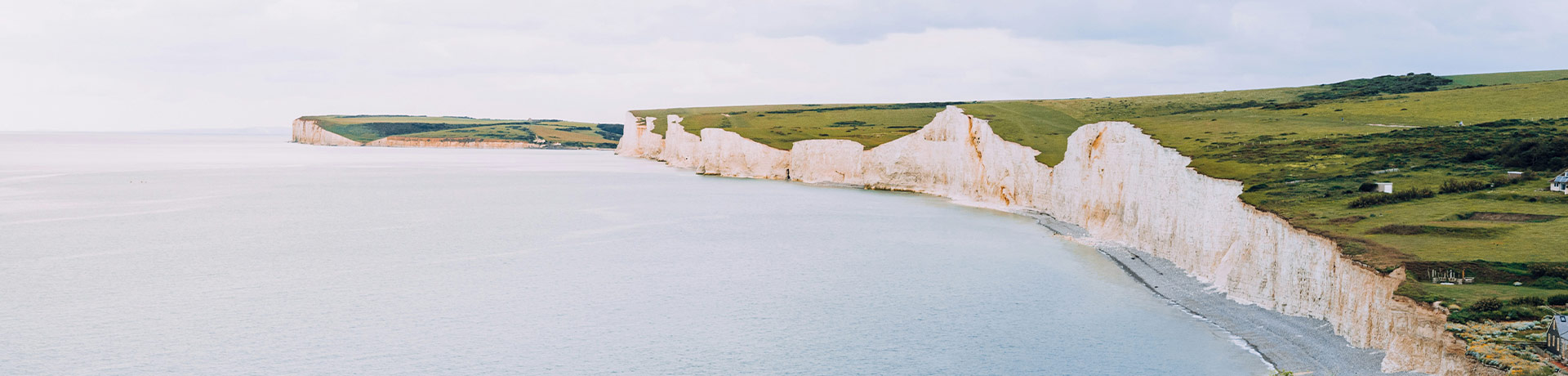
Set between the seaside towns of Seaford and Eastbourne in East Sussex, the Seven Sisters is a national treasure and a quintessentially English landscape. A series of dramatic white chalk cliffs, there are actually eight in total, although the name has stuck, and they form a part of the South Downs National Park as well as the Sussex Heritage Coast.
The chalky heights are a fabulous spot for cliff top walks, whether it’s a balmy summer’s day or a wintry afternoon. It’s not all about the cliffs, though. There are 500 acres of ancient downland to explore, too, making the Seven Sisters one of the longest stretches of undeveloped coastline on the south coast.
With all this space comes walks a-plenty, such as the 100-mile South Downs Way or a more manageable post-Sunday lunch stroll. Alternatively, head to the base of the cliffs at low tide and explore the shoreline for flints and fossils amongst the seaweed, or pay a visit to Cuckmere Haven at the western end of the Seven Sisters, where the River Cuckmere meets the sea to form a beautiful floodplain of chalk grassland and shingle beach.
East
North Norfolk Coast, Norfolk
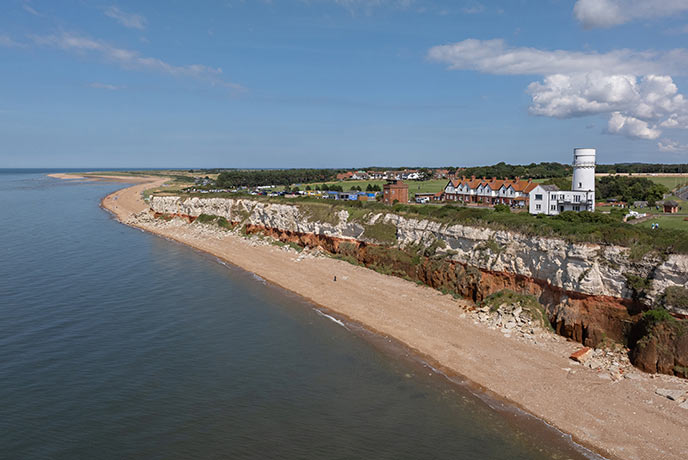
One of the UK’s hidden gem coastal destinations, Norfolk boasts 45 miles of stunning coastline to discover, from its Blue Flag beaches to its Deep History Coast. North Norfolk is actually home to the earliest evidence of humans living in Britain, nearly a million years ago, so it’s clearly been popular for a while!
If you’re after a relaxing day on the beach, head to Sheringham, with golden sands surrounded by cliffs and woodland, and Cromer, with its iconic Victorian pier, where you can watch fishermen catch the famous Cromer crab. Beach hut-lined Mundesley is a beautifully flat, quiet spot ideal for families, while Sea Palling, with its offshore reefs, makes calm waters perfect for little ones to play in.
For walkers, the Deep History Coast Trail runs just over 22 miles along the coast, with 11 points along the way to show you what the landscape looked like thousands of years ago. There are lots of pretty seaside towns to explore too, such as Wells-next-the-Sea, which lies within the Norfolk Coast National Landscape and has a pretty waterfront and a nature reserve, and Hunstanton, where you can go for an amble through the pretty gardens and enjoy a spot of fossil hunting by the cliffs.
North East
Whitby, North Yorkshire
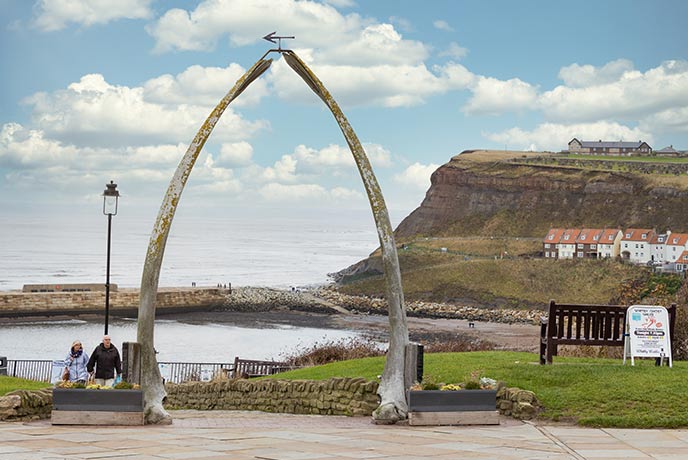
The charming seaside town of Whitby in North Yorkshire really needs to be on your ‘must-visit’ list of coastal destinations in the UK. With its incredibly rich history, literary connections, beautiful beaches and downright loveliness, it’s no wonder it draws in visitors from all over the world.
First off, no visit would be complete without climbing up to the imposing, Gothic ruins of Whitby Abbey. Founded in the 7th century by St Hilda and an inspiration for novelist Bram Stoker, whose infamous monster, Dracula, first landed here, the fascinating landmark is truly a sight to behold. You can visit the ‘Dracula Experience’, a fascinating exhibition in the town itself, for more insight.
Whitby is also home to the Captain Cook Memorial Museum, where you can learn all about maritime history and the life and voyages of James Cook, and the Whitby Museum, where you can learn about the rich history of the town and the surrounding area. They also have a great collection of fossils.
For a spot of fresh air, climb the 199 steps up to St Mary’s Church for stunning views over Whitby, the ruined abbey, and out over the North Sea, while the expansive sandy beach is great for paddling along the shoreline. Afterwards, have a stroll around Old Town, whose cobbled streets are lined with independent shops to explore and great places to eat and drink, including the famous Magpie Café, which is a must for freshly-cooked fish and chips.
Alnmouth, Northumberland
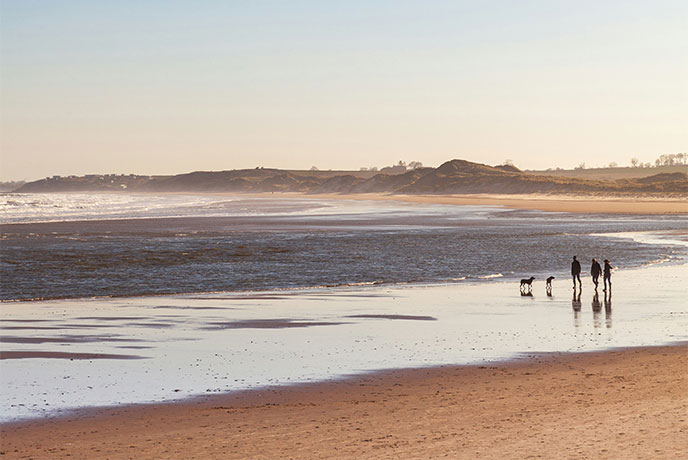
With its picture-perfect waterfront, where pastel-coloured houses line the River Aln as it meets the North Sea, Alnmouth is a delightful gem on the wild Northumberland coastline. Set within a National Landscape, this is a favourite for nature lovers, who are drawn here for its diverse wildlife and excellent bird watching opportunities amongst the dunes.
Recently featured in one of Robson Green’s Weekend Escapes, Alnmouth is also home to the smallest museum in Northumberland, The Ferryman’s Hut. Showcasing the lives of the ferrymen who would help people cross the River Aln over the centuries, it’s a fascinating oddity and well worth a visit. If golf is more your thing, Alnmouth is home to the fourth-oldest golf club in England and boasts beautiful views over Coquet Island and out over the North Sea.
A trip to the beach has to be a must, with its swathe of golden sand making it perfect for families with little ones - and it's dog-friendly too, so your four-legged friend won’t miss out. For a walk with a view, climb Church Hill up to St Cuthbert’s Cross, said to be where St Cuthbert agreed to become Bishop of Lindesfarne when asked by the King himself. There’s also a good selection of shops and places to eat, too, perfect for when you need to refuel.
Wales
Llŷn Peninsula, Gwynedd
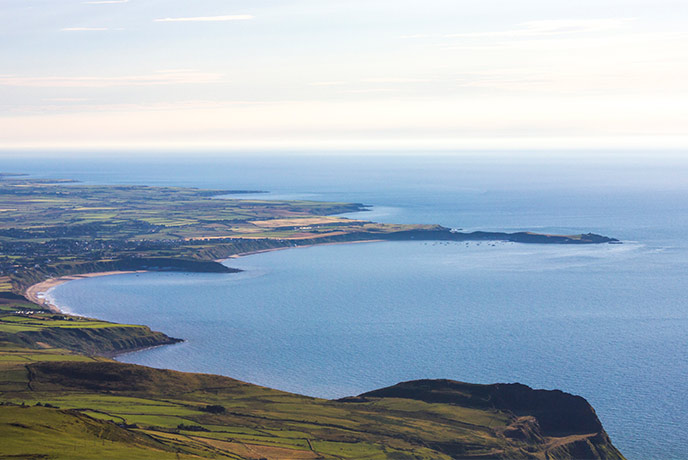
The Llŷn Peninsula, or Pen Llŷn in Welsh, is known as ‘the arm of Wales’ and is also compared to Land’s End in Cornwall. With 30 miles of coastline to explore and a National Landscape, it’s home to some incredibly dramatic scenery, both natural and manmade, which makes it a fantastic coastal destination to visit.
Take to the Wales Coast Path for stunning sea views, following craggy clifftops and passing tranquil bays, or discover one of the many beaches, such as dramatic Hell’s Mouth Beach (beloved by surfers), Whistling Sands Beach at Aberdaron (so-called due to the sand ‘whistling’ underfoot when it’s windy) or Nefyn Beach, where clear waters are reminiscent of the Mediterranean.
For a spot of history, pay a visit to Criccieth Castle, a 13th-century fortress that overlooks Tremadog Bay, before heading to Cadwaladers Ice Cream Café for a well-deserved treat. Nant Gwrtheyrn is a renovated Victorian village that’s home to the National Welsh Language and Heritage Centre, offering a fascinating pause during your travels.
For a truly unique experience, book yourself on a boat trip to Bardsey Island (Ynys Enlli), an island sanctuary for over 300 species of birds, while a visit to the Ty Coch Inn, nestled in the sand itself, is well worth the 20-minute walk on foot, having been named one of the top 10 beach bars in the world.
Scotland
The Inner Hebrides, Scotland
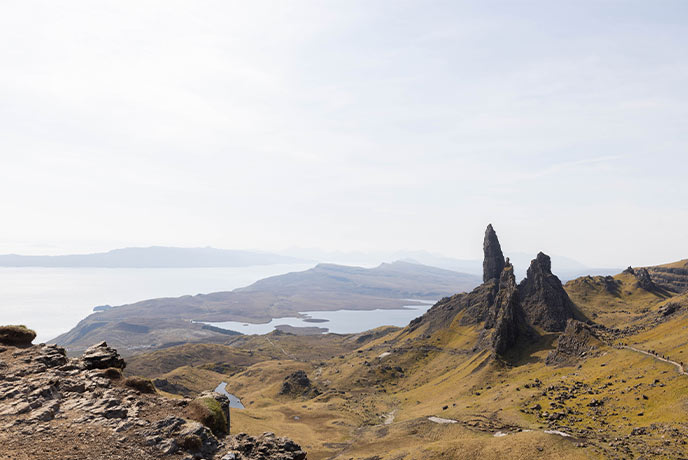
Comprising 35 inhabited islands and over 40 uninhabited ones, this Scottish archipelago stretches for 150 miles off the western coast of Scotland and is truly a spectacular area to visit. To the north of the Inner Hebrides, the Isle of Skye is the major island that’s easily reached via a bridge from the mainland.
Known as ‘The Misty Isle’, it’s an island that offers spectacular natural scenery such as the mountains of the Cuillin, the crystal clear waters of the Fairy Pools, the iconic rock formation of The Old Man Of Storr and the magical Coral Beach with its sand made from crushed white coral.
The culture here is rich and ancient, and you’re as likely to stumble across a castle (such as Dunvegan) as a distillery (a visit to Talisker, overlooking Loch Harport, is a must). To the south, you’ll find the beautiful island of Colonsay, 20 miles from the mainland, and you can reach it by ferry or plane. Measuring just 10 by 2 miles, Colonsay is small yet mighty in its offering of natural beauty, from great swathes of sandy beaches and semi-tropical gardens to a wide variety of plants and animals.
Top things to do include a visit to Colonsay House Gardens and Café (home to one of the finest rhododendron collections in Scotland), Colonsay Smokery to taste traditional hot and cold-smoked salmon (yum!), and wildlife spotting. The island is great for cycling as it’s relatively flat, and there are lots of water sports (such as paddleboarding), or you can pay a visit to a community-owned croft.
Feeling inspired? Take a look at our beautiful holiday cottages in the UK and start planning your coastal getaway today.