From its rolling hills and tranquil, slow-flowing rivers to the honey-hued stone houses that make its villages and market towns so special, the Cotswolds is a stunningly beautiful part of the South West of England that’s also steeped in rich tales of myth and legend.
From bewitched animals to ancient monoliths, the diversity of the Cotswolds’ folklore shows the deep relationship between its people and the land they inhabit. Here’s a choice few of their most fascinating tales to lose yourself in and to inspire your adventures in this storybook National Landscape.
A word of warning… By the nature of folklore, some of these tales can feature dark content, so proceed with caution.
The Cotswold Hare
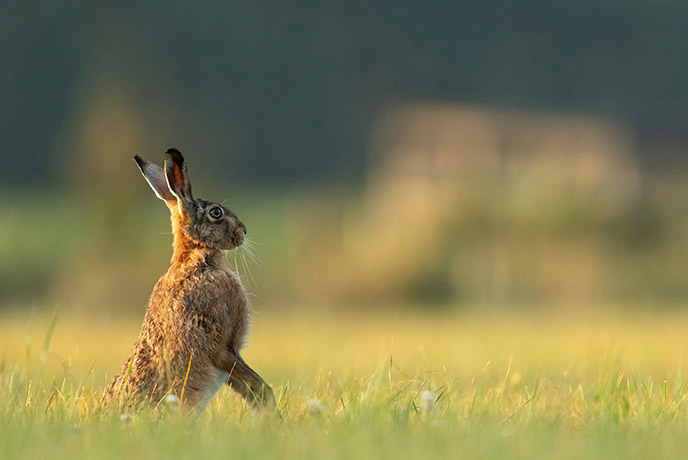
Hares, the curious cousins of rabbits, have always had a peculiar place in British folklore, with associations with witches and the Celtic belief that they symbolised abundance, good luck, and good fortune. In the Cotswolds, the hare is especially revered, appearing in the names of villages such as Harescombe, Haresfield, Harebushes and Harehill (today known as Harhill). Hares even appear in a Roman mosaic in Cirencester (check it out at the museum), as well as in church carvings and tapestries.
A symbol of fertility and rebirth, the Cotswold Hare is said to roam the land under the silvery light of the moon and be possessed with magical powers, and if you are fortunate to spot one after dark, you’ll be gifted good luck. So, if you’re out and about exploring the Cotswolds by moonlight, keep an eye out for these bewitching creatures!
The Dragon of Stow-on-the-Wold
A visit to Stow-on-the-Wold will have you discovering one of the prettiest market towns in the Cotswolds, with its gorgeous market square, honey-hued houses, and delightful shops and tearooms to explore. It would come as a surprise, then, that according to legend, this idyllic spot was once cursed with a much-feared dragon who would terrorise the locals and cause destruction to buildings, all in the search for gold and riches to line his nest. Luckily for the townsfolk, a brave knight heard about the dragon and came to the town’s rescue, battling a long and arduous fight that took place all over the town until the knight at last was victorious and the dragon slain.
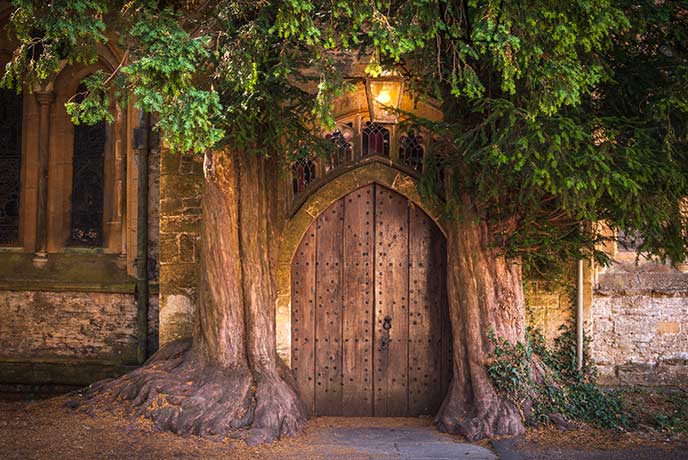
Another fascinating folkloric connection to Stow is the beautiful door of St Edward’s Church. Dating back to the 13th century, if you head to the north porch, you’ll find it flanked by two beautiful yew trees, which look to be growing from the walls. J R R Tolkien, on visiting the church, was said to be inspired by the door and used it within his book The Lord of the Rings as the doors of Durin, which lead into the dwarven realm of Moria.
Haunted Sudeley Castle
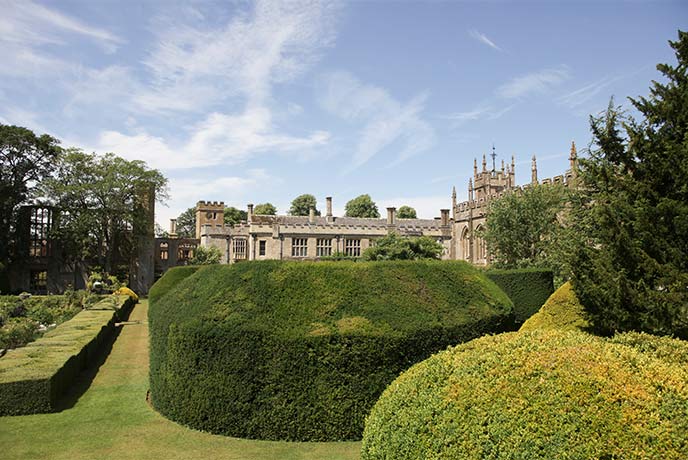
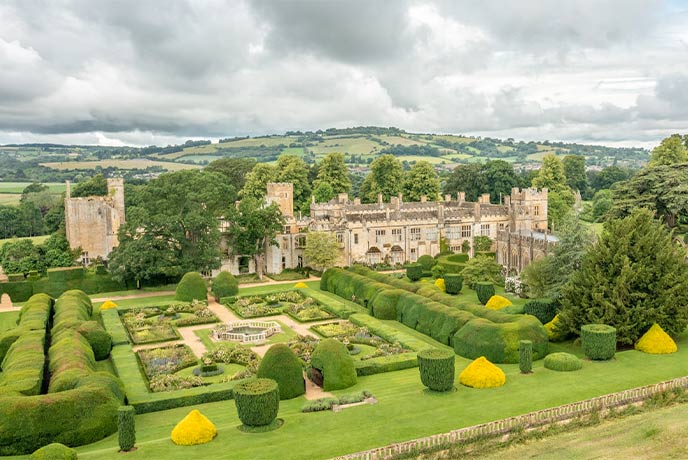
Beautiful Sudeley Castle lies in the pretty town of Winchcombe, just outside of Cheltenham, and was the Tudor home of Queen Katherine Parr, the last wife and survivor of King Henry VIII. With over 1,000 years of history, the castle has seen its fair share of drama, from love and loss to battle and destruction, so it’s not surprising that it has its fair share of ghostly inhabitants, many of whom are still seen today wandering the ramparts and corridors by staff and visitors alike.
Tales of hammering blacksmiths in the vaults, a playful dog, a little blonde boy playing in the gardens and even a disapproving housekeeper who checks up on the cleanliness of the castle are as much a part of the fabric of the castle as the walls. Perhaps the most famous is Queen Katherine Parr herself, who died five days after giving birth and is said to roam the castle looking for her baby daughter, who herself sadly died around the age of two.
The Rollright Stones
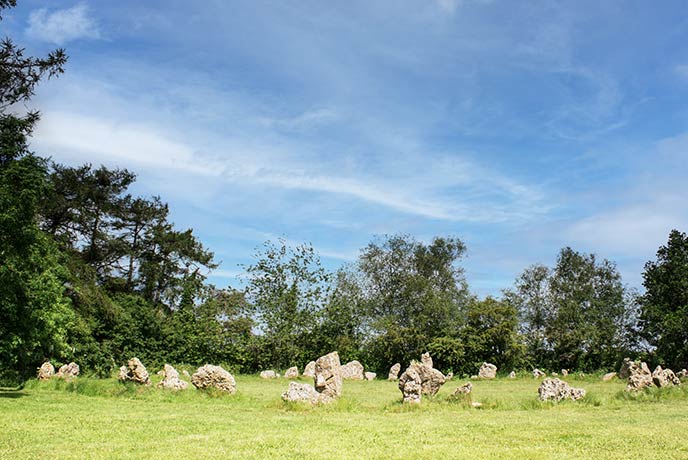
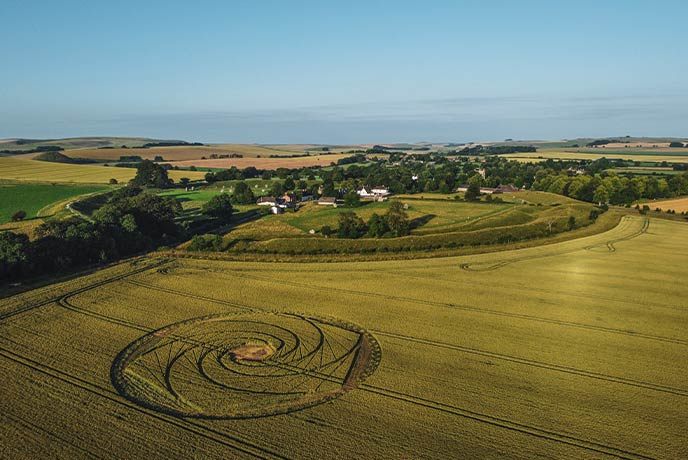
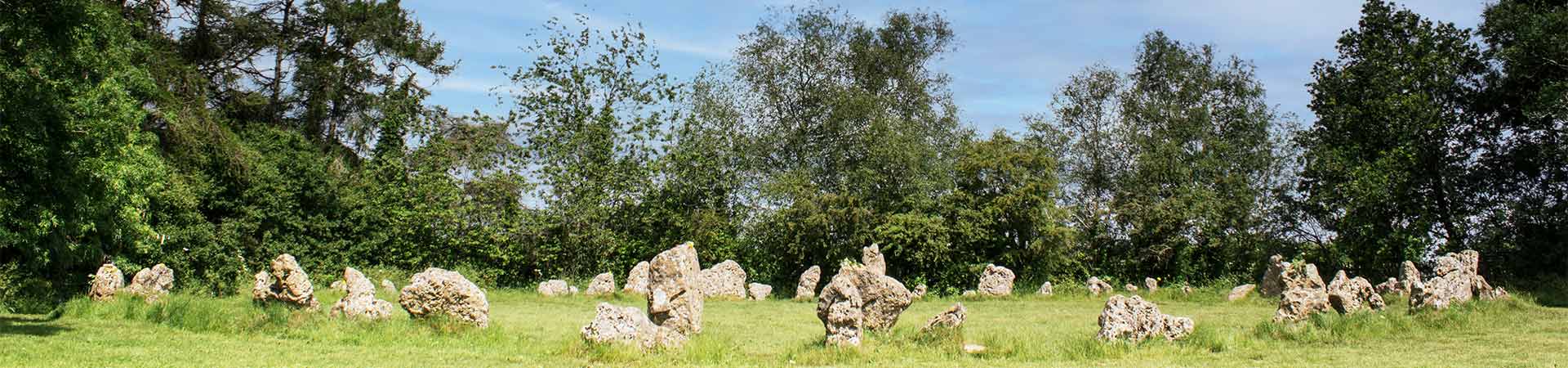
Nestled in the countryside between the Cotswold villages of Morton-in-Marsh and Chipping Norton lie the fascinating Rollright standing stones. Dating back to the Neolithic and Bronze Age, there are three sections to this site: the Whispering Knights dolmen, the King’s Men stone circle, and out on its own, the King Stone. Using limestone carved from the Cotswold hills, there’s been much discussion as to the meaning and uses of the stone, and equally a great deal of mythology.
Legend has it that a king and his army were challenged by a witch with the following: ‘Seven long strides shalt thou take, and if Long Compton thou canst see, King of England thou shalt be’. Unfortunately for the king, a large mound was in the way, and he couldn’t see, so the witch turned them all to stone. The witch herself became an elder tree to keep an eye on the stones. It’s said that it’s impossible to count the King’s Men, as every time you go around the stones, the number changes. Legend has it that if you can count the same number three times, your wishes will come true!
The Witch of Painswick
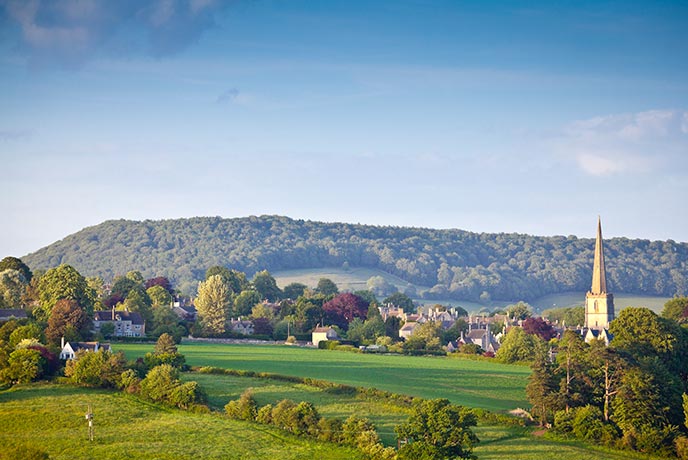
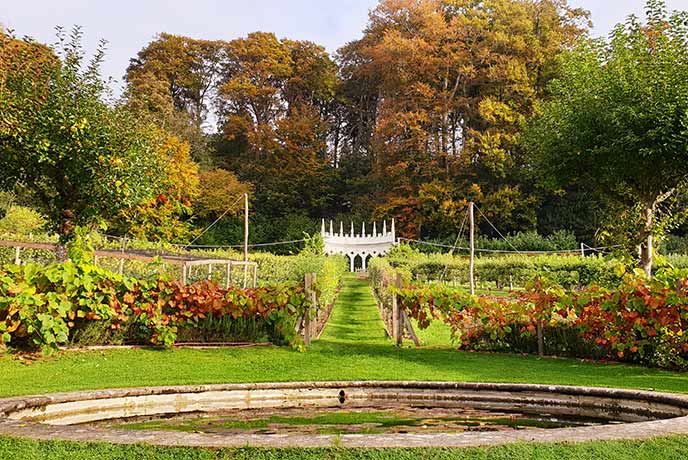
The picturesque village of Painswick is probably most famous for its Rococo Gardens, but if you’re in the area, make sure to stop by the church, which is nestled at the centre of the village, and have a walk around its splendid churchyard. Home to 99 magnificent yew trees, each of which is lovingly taken care of and is truly a vision to behold.
There’s a legend attached to them, of course. It’s said that a powerful witch placed a curse on the village (nobody is quite sure why she wanted to curse them). The curse was that the yew trees would never exceed 99. And it’s true – any attempt to plant a hundredth tree has always failed, with locals left believing that whoever tries to plant another will suffer a terrible fate. Such is the power of superstition that there have been no recent attempts to increase the tree population.
The White Kitten of Stow Hill
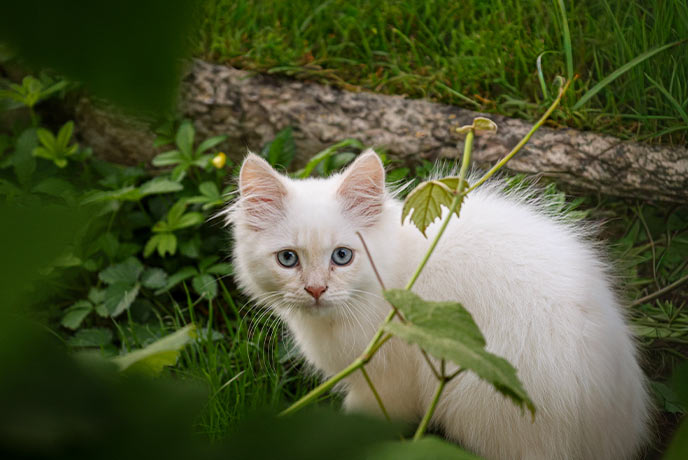
It is said that a long time ago, on Christmas Eve, a caravan of Romani was trying to make their way from Burford to Stow-on-the-Wold up a steep hill through a particularly bad snowstorm. Fearful of the ghosts said to haunt the woods, they huddled together as the spectral beings circled the caravan, wailing loudly. One of the children, hearing a different noise, opened the door, through which a tiny white kitten slipped and greeted them (all kinds of magical things happen on Christmas Eve, after all).
It advised them to follow the birds and listen for the sound of church bells, which they duly did, plodding faithfully through the snow, until they reached the outskirts of Stow-on-the-Wold and found a kindly farmer who let them lodge with him. Once safe and sound, the little kitten disappeared, and it was all agreed that it wasn’t a witch’s cat or death omen (as commonly believed), but an angel trying to find its way back to heaven.
The haunting of the Ram Inn
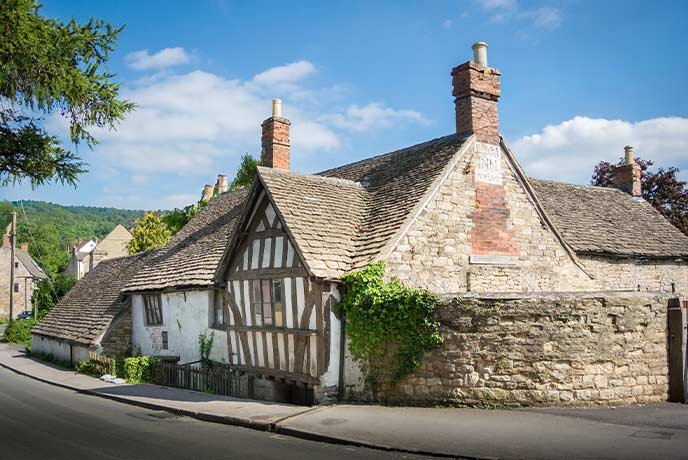
In the picture-perfect town of Wotton-under-Edge lies the infamous, ancient, and rather quirky Ram Inn, whose eight-hundred-year-long history is as dark as it is dramatic. Considered by many to be England’s most haunted building, this medieval Grade II listed building is steeped in character and strange atmosphere, and definitely warrants a visit if you’re passing through.
Said to be built on an ancient burial ground and intersecting ley lines, visitors have experienced freezing temperatures and odd noises, with ghostly residents including an unfortunate woman from the 1500s who, hiding from the witch trials after being accused, was uncovered in the inn and sentenced to death. Other ghostly apparitions include a black cat (coincidentally, a 500-year-old mummified cat was found in the wall – said to be good luck), and a waving young girl. Less friendly spirits include a poltergeist who bangs on windows, an ominous monk, a Roman centurion, and, most disturbingly, a woman who floats upside down from the ceiling.
The Bibury Trout
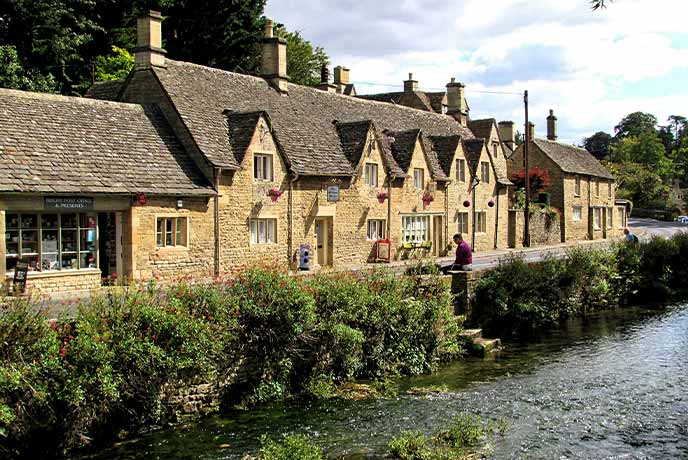
Not far from the ancient market town of Cirencester lies the pretty village of Bibury, through which runs the sparkling waters of the River Coln. Today, the area is well known for the quality of its trout. Trout have long been associated with the magical world, and in the Cotswolds, they are believed to have the power to grant wishes and good fortune.
The people of Bibury have, for generations, whispered their wishes to the waters in the hope that the shimmering silver fish will hear them and grant them their heart’s desires. So, when you’re strolling by the riverbanks, why not whisper a wish to the water? Who knows, it might just come true!
Feeling inspired? Take a look at our beautiful holiday cottages in the Cotswolds and start planning your getaway today.