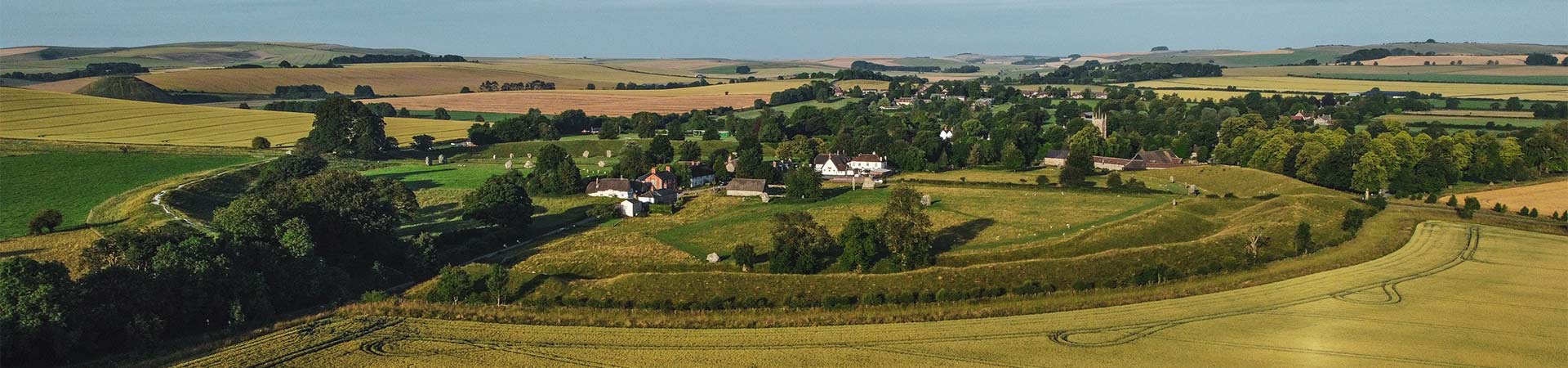
Wiltshire, a county with vast grassy plains, rolling hills marked with white horses, incredible Neolithic stone circles and wily inhabitants. It’s no surprise then that such a place should have a rich seam of fantastic folklore to draw upon, whether it's ancient tales of ghostly dogs or vengeful stone monoliths, this astonishing county certainly has a knack for the uncanny.
With so many strange tales to explore, it’s a difficult task to bring a collection together, but here are just a few of our favourite myths and legends of Wiltshire to whet your appetite.
A word of warning… By the nature of folklore, some of these tales can feature dark content, so proceed with caution.
Stonehenge
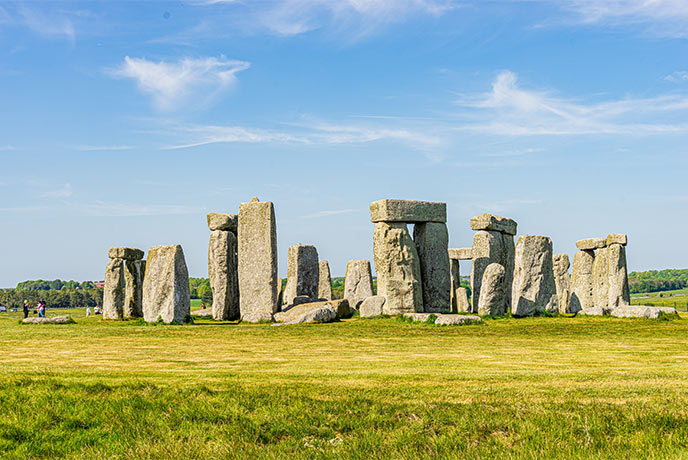
No guide to the legends of Wiltshire would be complete without a mention of the county’s most famous landmark, Stonehenge. Part of the landscape since 2000-3000BC, with global discussions of what it was used for, there’s no need to delve into its history here, but what is fascinating about Stonehenge is the amount of other curious tales that surround the area, such as that of the phantom plane that has been seen crashing silently into nearby woodland.
Said to be the ghostly apparition of a plane crash that happened in 1912, it was first spotted in 1953. Other sightings include UFOs and aliens, some as recently as 2020, while security guards have heard disembodied singing, and seen strange figures flitting through the stones, ghostly dogs guarding burial chambers, eerie blue lights and even small, elvish creatures.
Avebury Stone Circle
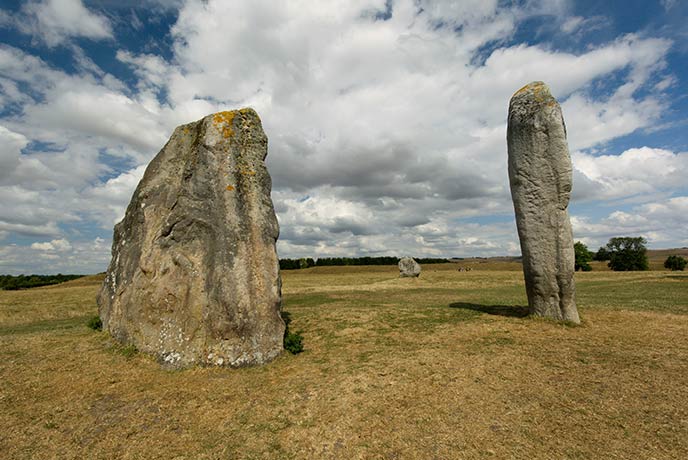
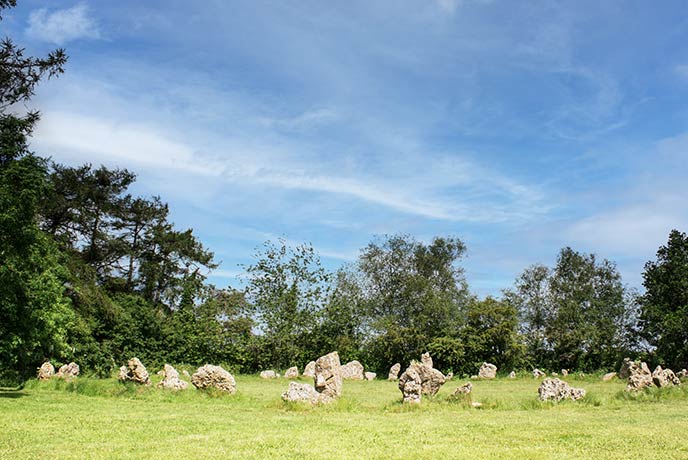
Wiltshire is blessed with two incredible Neolithic stone circles, and Avebury is often left in the shadow of Stonehenge, despite it being of equal importance and just as fascinating. Much larger in scale (its circumference is almost a mile), the stones almost surround the entire village of Avebury. Dating back to between 4000-2400BC, it is believed that anyone ‘dabbling’ or trying to move any of the stones meets an unfortunate end, such as the 14th-century chap whose crushed skeleton, along with coins and other personal belongings, were found underneath one toppled stone.
Other such stories, such as when some stones were removed for building purposes, with said houses resulting in tragic ends, or a cobbler, who, daring to work next to one of the stones on the Sabbath, was squashed to death by it for blasphemy, just add fuel to the vengeful stone fire.
The Black Dog of Mildenhall
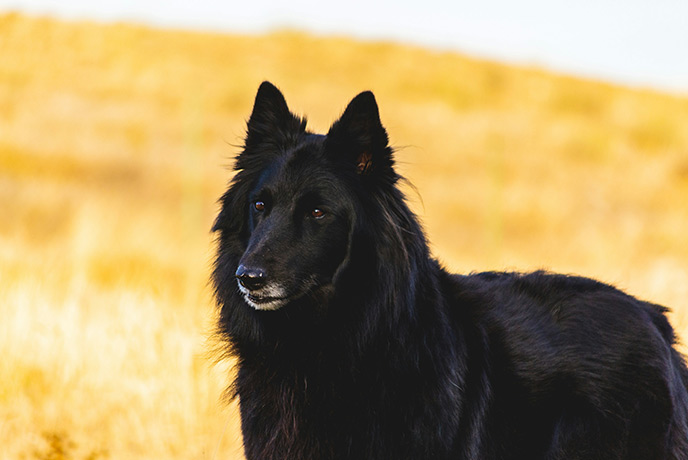
Tales of ghostly black dogs abound across Britain, whether as harbingers of doom or loyal ghosts waiting for their long-gone owners to return, or simply to leap out of bushes to terrify unaware travellers at night. The village of Mildenhall has its own black dog claim, with a fascinating history. An important military settlement for the Romans travelling between Bath, Cirencester, and Winchester, recent excavations revealed extensive dwellings, a road, and the largest coin hoard to be found in Roman Britain (over 55,000 coins were unearthed).
But it’s the road we’re interested in here, where a huge black dog with a rattling chain has been spotted on numerous occasions along the Roman road, even as far as Grafton, a village several miles away. There are many theories around the sightings, from wolves (said to have inhabited nearby Savernake Forest up to the 19th century) to plague dogs, kept by households to indicate the poor inhabitants had been infected and to warn others to stay away.
Wiltshire’s white horses
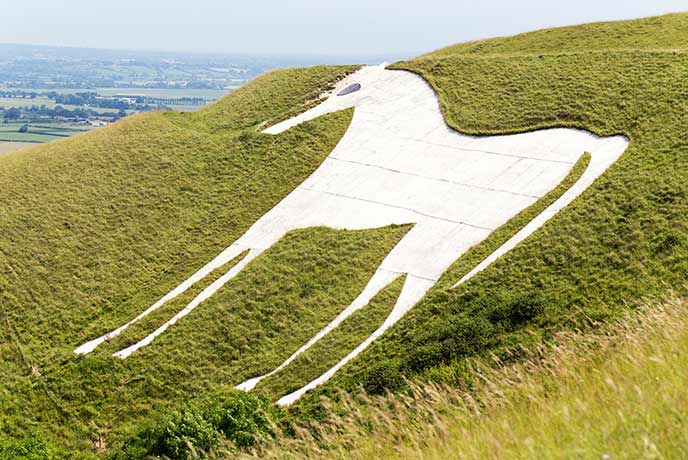
Historically, Wiltshire had 13 white horses, huge images depicted in chalk, dotted around its landscape, with eight still visible today. And while the oldest and perhaps the best known, the Uffington Horse, may be just over the border in Oxfordshire, Wiltshire takes the prize for having the highest concentration of chalk images in Britain.
White horses in Wiltshire have magical properties all of their own, with locals believing that unmarried girls, on counting 100 white horses, would go on to marry the next man they met, while the chalk horses themselves are said to wake up at the stroke of midnight to find water and drink from village ponds, wells, and springs. There’s also a connection to King Arthur, too, as the white horses are said to be ready to rise again to ride with Arthur when he comes back to defend Britain in its time of need.
The Black Swan of Devizes
Possibly the most haunted pub in Wiltshire, The Black Swan in Devizes, in its current form, only dates back to 1737 (although there has been a pub on the site for much longer), and overlooks the market square in the centre of the town. From its chilling cellars to its brrr-inducing bedrooms, there are numerous tales of knockings and bangs, sudden drops in temperatures, and even glowing orbs.
For hardened sceptics (or ghost fans), bag a night in Room 4, and you might spot the ghostly figure of a young woman in a flowing dress by the window, who goes on to stand up and disappear through the wall behind the bed. In the cellar, meanwhile, ghost hunters have recorded strange noises and have even reported to have captured the image of a face staring at them from the cellar wall.
The flying monk of Malmesbury Abbey
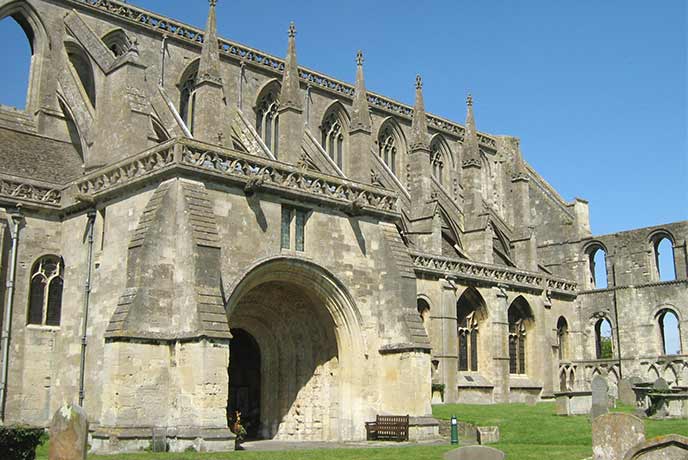
Malmesbury Abbey near Chippenham is a stunning 12th-century building that once belonged to Benedictine Monks, and is now a peaceful refuge that’s well worth a visit when exploring north Wiltshire. Probably more famous for being the home of the first king of England (King Althelstan the Glorious – what a great name!) and Wessex’s first saint (Saint Aldhelm), we’re instead going to focus on a peculiar little tale around Brother Eilmer.
Inspired by the Greek tale of Icarus, who flew too close to the sun in his wax and feather wings, Brother Eilmer built his own set of wings and, with a great deal of faith and prayer, launched himself off the abbey’s tower. Needless to say, he travelled quickly – downwards – and ended up never walking (or flying) again, although on seeing Halley’s Comet, he foresaw the Norman invasion – earning him recognition as a prophet.
The Wiltshire Moonrakers
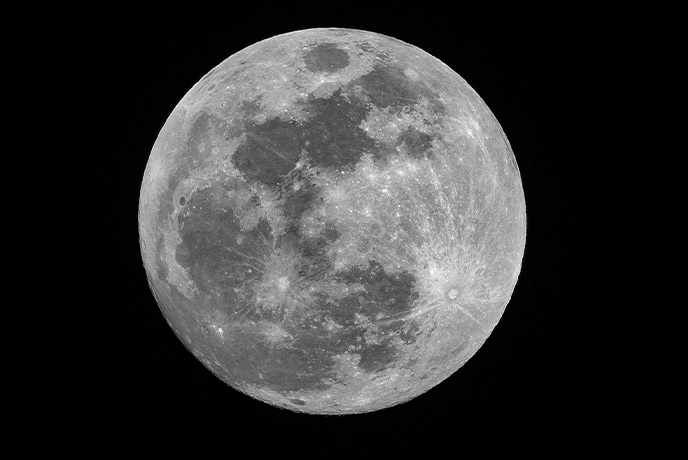
This delightful tale showcases the quick wits of Wiltshire folk. The tale follows two fellows transporting barrels of contraband brandy hidden under a big pile of hay on a cart to a pub in Devizes. Disguised as farmers, the men had made good time when the donkey pulling the cart got spooked by the full moon, broke free, and ran off. The barrels fell off and landed in a nearby pond. The noise was such that the men, terrified, quickly hid the barrels with reeds as an exciseman (someone on the lookout for smugglers) approached.
The men, thinking quickly, began raking the water, explaining that the donkey had bolted and their ‘cheese’ had fallen in the water. The exciseman laughed, thinking the men thought the reflection of the full moon was their errant cheese, and dismissing them as simpletons, went on his way, leaving the men to find the donkey, load up the barrels, and hurry away on their journey.
The oddness of Old Sarum
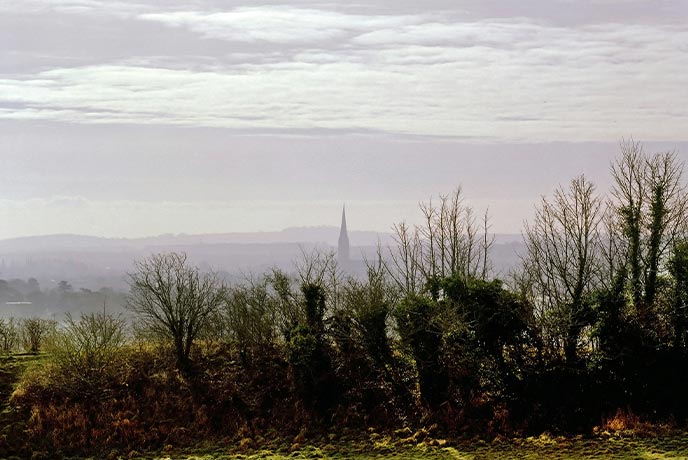
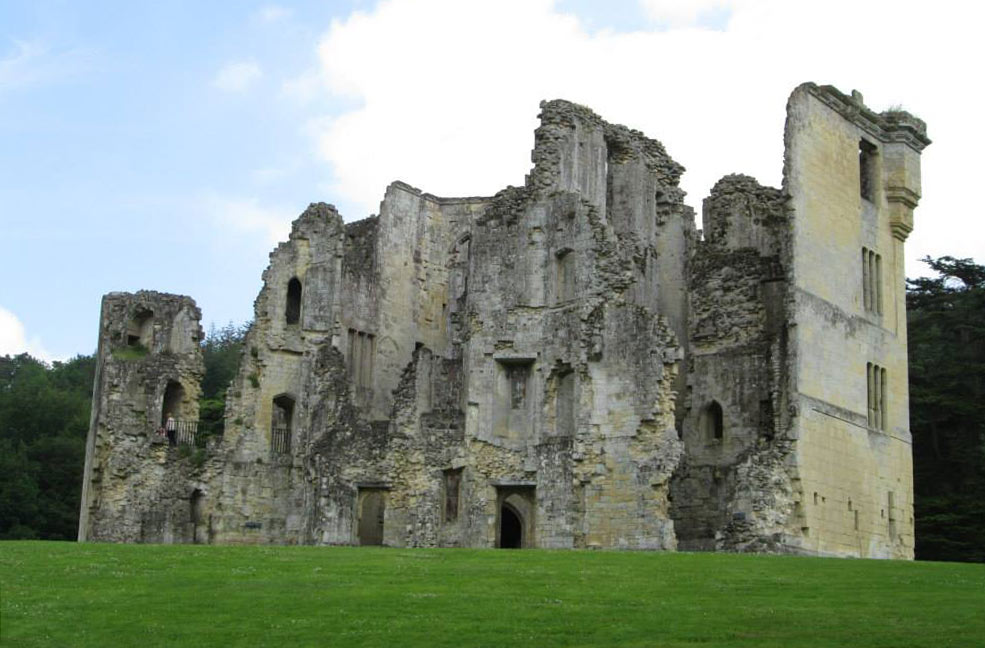
The site of Old Sarum near Salisbury is where Wiltshire’s original cathedral was built in 1075. Bishop Osmond began the build, but it was Bishop Roger, who rose to eminence when he was befriended by King Henry I, who made him Royal Chaplain. Unfortunately, after the king’s death, the new king, Stephen, took a dislike to him and stripped him of his power and wealth, causing him to die of a broken heart.
After that, the cathedral took on a strange air, with odd winds, clergy going blind, and bad feelings seeping throughout, so it was decided to build a new cathedral. Legend has it that an archer was asked to shoot an arrow from Old Sarum and it was built where it landed. Today, only a few stones and mysterious earth mounds remain, although some visitors feel as though they are being watched, with a forlorn feeling following them around.
UFO sightings in Wiltshire
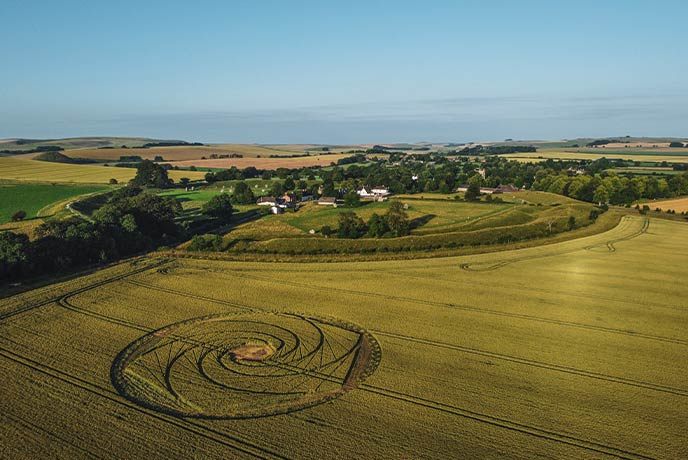
It’s a well-known fact that Wiltshire has more than its fair share of UFO sightings. Why that is, we’re not really sure. Warminster has to be at the top of the list for unexplained flying objects. Between 1965 and 1966, the town became famous for the ‘Warminster Thing’, a cigar-shaped flying object spotted by multiple witnesses in the area, with one local man, Arthur Shuttlewood, claiming to have seen around 800 UFOs in the area.
Another hotspot for extra-terrestrial visitors is Cley Hill, not far from Warminster, where sightings go back as far as the 17th century. Enthusiasts today gather to gaze at the skies, looking for unusual objects and marvelling at the view. RAF Rudloe Manor near Corsham has often been described as Britain’s ‘Area 51’, with crop circles making a regular appearance here too. Whatever you think, it’s worth turning your gaze upwards as you explore this fascinating county – you never know what you might see!
The cleric detective of Pewsey
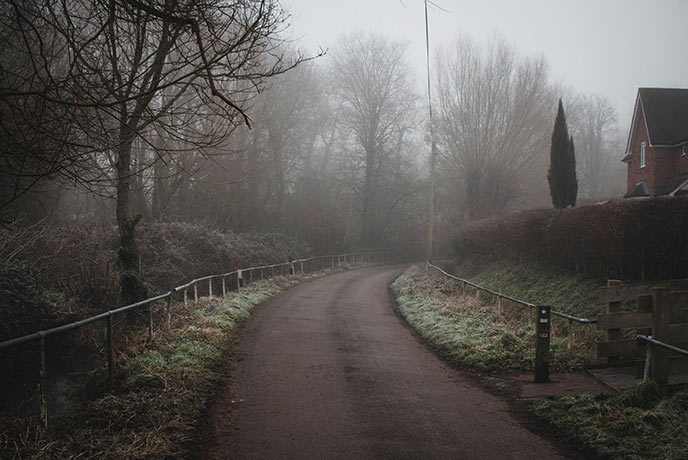
In 1798, the sleepy Wiltshire village of Pewsey near Marlborough was thrown into chaos due to the murder of a local farmer. With no one from the law available to help at the time, the local cleric, a Reverend Joseph Townsend, took it upon himself to find out who the murderer was, in a very unusual and bizarre manner. Legend had it in Wiltshire that a murdered man would point his finger at the person who killed him, so the Rev.
Townsend took it upon himself to dig up the poor farmer and bring his body into the church for the service on Sunday. Everybody in the congregation was told to place their hand on the dead man’s face and declare their innocence. One man, however, was too frightened to approach the body of the farmer and was declared guilty and later hanged for the murder.
Feeling inspired? Take a look at our beautiful holiday cottages in Wiltshire and start planning your folklore-themed getaway today.