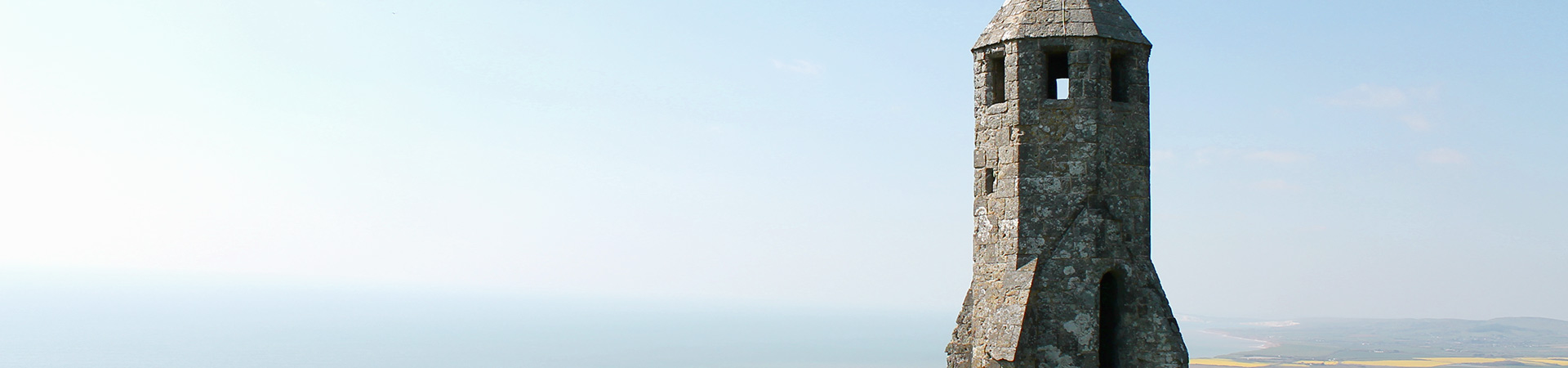
Nestling in the English Channel, the beautiful Isle of Wight is a magnetic holiday destination that’s just a hop, skip and a jump from mainland England. Its perfect coastline, peaceful countryside, and charming towns and villages are as idyllic as you can get, but did you know there’s a rich vein of folklore to be found here too? From protective dragons to messages from God and stone throwing competitions with the Devil, there’s a colourful side to this beautiful island that’s well worth discovering. Here’s a collection of our favourite tales to be found from across the water.
A word of warning… By the nature of folk tales, some of these myths and legends may feature dark content, so read on with caution.
The First Dragon
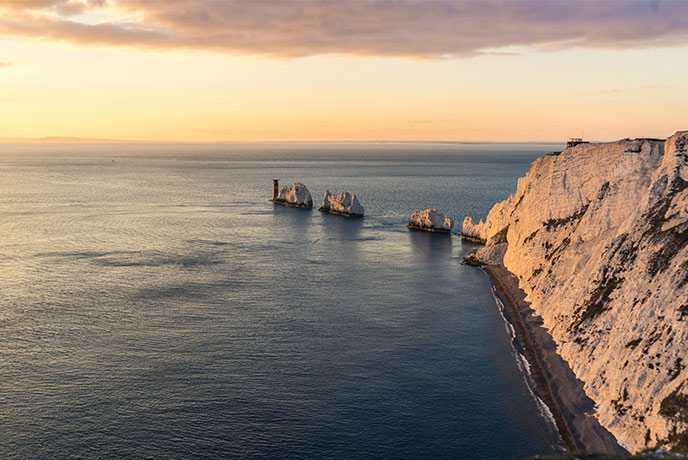
When the earth is said to have been made, it rumbled and pushed an egg to its surface, from which emerged the first dragon, Ollpheist. Strong and kind, she was the mother of all dragons. After a while, man arrived on earth and battled all Ollpheist’s children who fought back just as much. Distraught, she left her family to find a quiet spot, and felt drawn to a nest of three islands, whose magic was strong. She settled on the central island, and fell asleep. After a while, she was woken up by the people of the land who were sad. As a kind dragon, she helped bring the three islands – separated by conflict – back together in exchange for somewhere to live. The people happily agreed, so she buried herself deep, causing lava and rock to rise up and bring the islands back together as one – and so it was that the Isle of Wight was created.
St Catherine’s Stone
If you happen to visit Mottistone Gardens and Estate near Brighstone, make sure to take time to explore the wider estate, where you’ll discover two ancient stones, the remains of a 6,000-year-old Neolithic long barrow. Local legend has it that St Catherine and the Devil, deep in argument about who should have control of the Isle of Wight, decided to have it out with a rock-throwing competition. They stood on St Catherine’s Down (a mere eight miles away) and each threw a rock. Of course, good always trumps evil, and St Catherine’s rock travelled that little bit further, causing the Devil to stomp off in a huff. St Catherine’s rock was also bigger – four meters high and two meters wide – while the Devil’s was a smidge over two meters tall by just over a meter wide.
God’s chosen hill
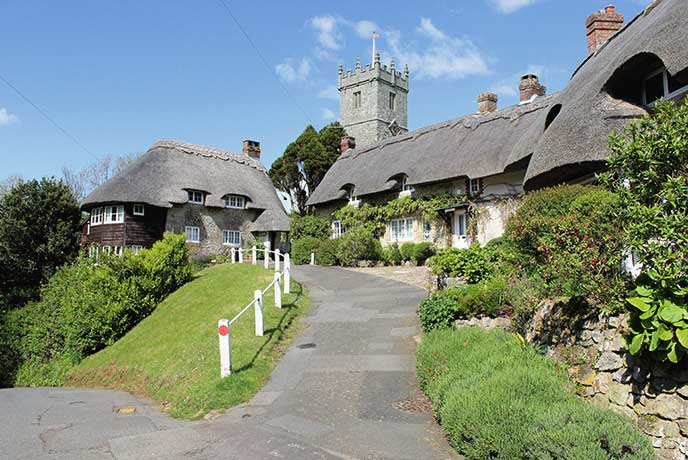
If you visit the chocolate-box pretty village of Godshill, you may well want to treat yourself to a yummy cream tree in one of its lovely tea rooms, or potter around their famous model village. But did you ever think about how it got its strange name? Legend has it that back in the 7th century, when the villagers had just converted to Christianity, they set about building their own church at the bottom of the hill by the village. After a long day of making plans and putting the base stones in place, the villagers awoke to find that the stones and tools had all been moved to the top of the hill. The villagers, perplexed but determined, brought all the materials and tools back down again and started rebuilding. But the same thing happened again that night, and the next. After several mornings of bringing everything back down the hill, the villagers decided that it was God telling them to build the church at the top, so they did and renamed it God’s Hill, and called the previous spot where they were to build Devil’s Acre.
The Pepperpot
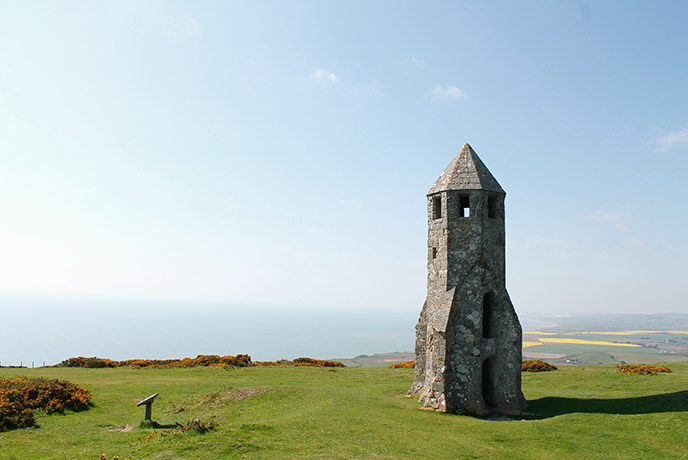
Any visitors to South Wight and the surrounding area may notice on their travels the strange octagonal tower of St Catherine’s Oratory, or ‘The Pepperpot’ as it’s known to locals. Standing on one of the island’s highest points, it’s a unique and beautiful building with an interesting history - the last remaining medieval lighthouse to survive in England. Built in around 1323, it was erected as an act of penance by Walter de Godeston, whose errant servants looted a ship that belonged to a monastery in northern France. The unfortunate ship had run aground on the rocks at Atherfield Ledge, and the servants stole 174 casks of wine that was meant for another monastery. Walter was ordered to pay a fine and was almost excommunicated by the Catholic church, so he built the lighthouse as penance to help ships avoid floundering on the rocks. He also built an oratory next door (which was demolished in the Reformation) for a priest to say prayers for his family and for lost sailors, and to make sure the lighthouse was always kept lit.
The ghosts of Knighton Gorges
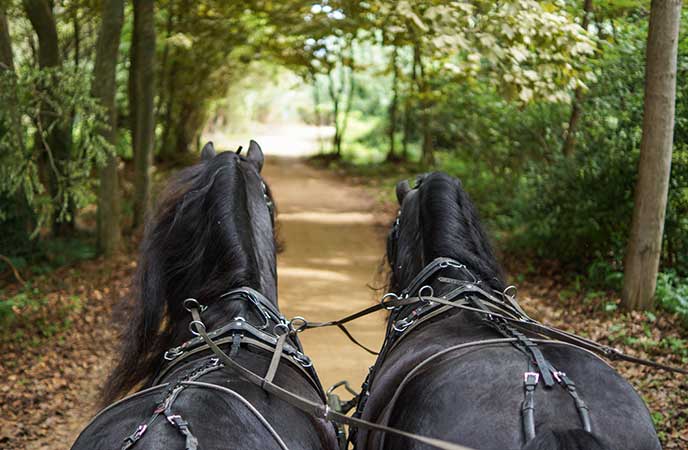
Although demolished long ago in the 1820s, the strange tales surrounding Knighton Gorges, one of the islands’ most impressive manor houses, exist to this day. Originally built by Hugh de Morville, one of the four knights who assassinated Saint Thomas Becket, the Archbishop of Canterbury, the house was beset by bad luck and said to be cursed, with untimely deaths and money issues plaguing the manors’ occupants. So, what exactly are the ghosts if the building is no longer there? Well, many have seen the house itself, in all its glory, filled with spectral guests in Georgian attire. Other tales tell of the stone pillar gates which still remain today - passers-by have seen stone animals on top of the pillars, when there are none. Others have seen the ghostly figure of a girl in a blue and purple gown, while sometimes a coach with four horses, accompanied by a hound, is seen – said to be the ghost of Tristram Dillington, a former owner of the estate.
St Boniface’s Well
Hidden away near Ventnor, this holy well is named after St Boniface, a Christian missionary who travelled around Europe spreading the word of God. He was said to have visited Bonchurch on the Isle of Wight in 710AD where he preached from Pulpit Rock, and on the Isle of Wight there’s a spot called St Boniface Down where the well is located. Over the centuries, many traditions and tales have grown around the well, such as youngsters decorating it with flowers and wearing garlands on the saint’s day, and sailors holding the well in reverence whenever they travelled past. It was also believed that if you approached the well never looking behind you (no mean feat as it’s positioned on a steep slope), any wish made when drinking the water would come true. Another tale tells of an old man who attempted to deepen the well, unfortunately causing it to dry up and stay that way until the old man died. Today, the well is very hard (and somewhat dangerous) to find, and it’s also dried up, but there is a National Trust sign located nearby.
Michael Morey’s Hump
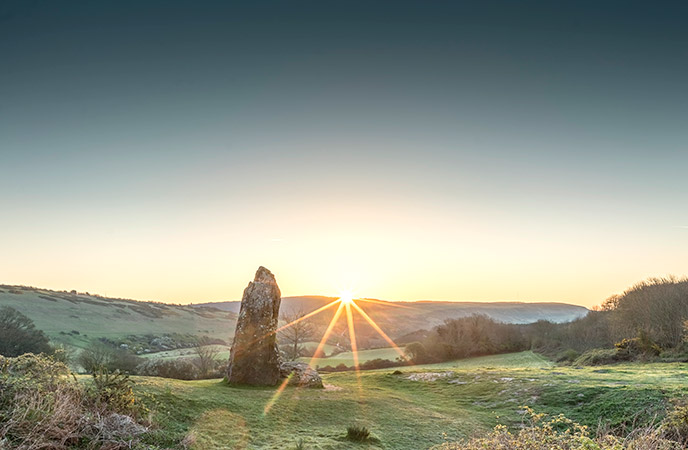
Deep in the countryside on the Isle of White near Newport lies an ancient Bronze Age barrow. However, our ghostly tale heralds from more recent times, notably 1736 when the site was used as a place of execution. A local woodsman, by the name of Michael Morey, was accused of the murder of his grandson. He was captured and taken for trial in Winchester where he was found guilty, and then taken back to the island to be hung by the gibbet on the barrow before being buried underneath it. Legend has it that if you visit the mound at midnight, circle it twelve times and call out ‘Michael Morey’ three times, his ghost will appear to you. The gibbet post is kept at the local pub (the ‘Hare and Hounds’ at Downend) and there’s even a skull kept there, said to belong to Michael Morey himself.
Dog tales and cat curios
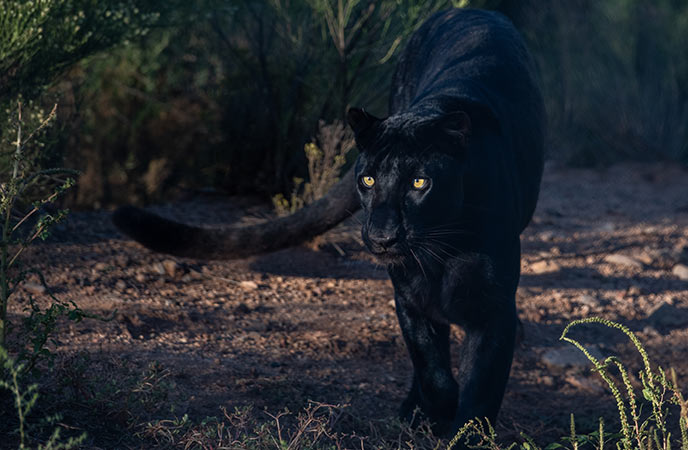
Dogs and cats feature quite a bit in island mythology, especially when connected to the supernatural. One tale tells of a certain Squire Thatcher who was pestered by a witch disguised as a black cat. The Squire’s cook, frying pancakes at the time, threw hot lard at the cat, which then ran off hissing and spitting in pain. The witch-woman suffered from back pain from that moment on. Another tells of a mummified cat found in the walls of Haseley Manor, said to protect its inhabitants from dark forces. A spectral dog, aka the Black Shuck, is said to haunt the countryside near Rookley. Other stories tell of dogs being used to pull narrow carts along pathways and through gateways, and this tale is actually true – rag and bone men in particular favoured this strange form of transport to get around! In more recent times, ‘big cat’ sightings have been recorded on the island (up to 120 of them by 1985), although there’s been no concrete proof one exists – yet!
Feeling inspired by our collection of myths and legends? Take a look at our gorgeous island holiday cottages on the Isle of Wight and start planning your getaway today.