The county of Dorset, with its lush countryside, craggy coastline and rich history, is, of course, laden with its own myths and legends that weave their way through the county to this day.
From sea chickens (yes, really) and UFO sightings to ghost villages and strange standing stones, we’ve curated a collection of Dorset’s strangest and often downright odd myths and legends to delve into, so when you come to stay in one of our beautiful cottages in Dorset, you can fully immerse yourself in the rich lore and fascinating traditions of this incredibly beautiful county.
A word of warning… By the nature of folklore, some of these tales can feature dark content, so proceed with caution.
The UFOs of Maiden Castle
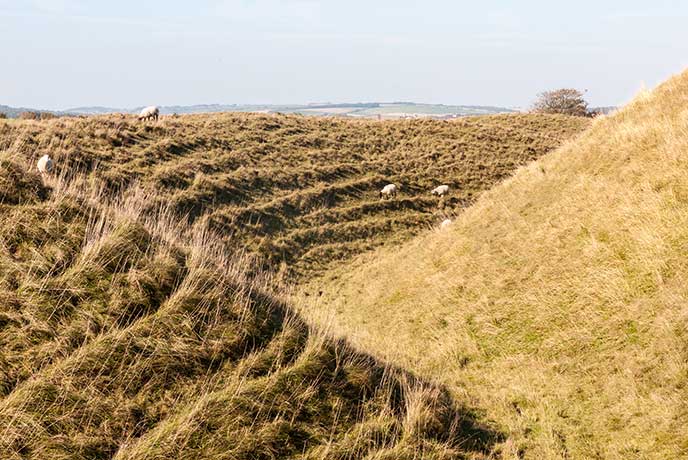
Dorset as a whole has witnessed many UFO sightings over the years, with the first dating back to 1733 when a silver disc was seen floating above the village of Fleet, near Weymouth. As well as crop circles and other extra-terrestrial happenings, one of the most regular ‘hotspots’ for catching a glimpse of our intergalactic neighbours is at Maiden Castle. Perhaps not as well-known as Dorset’s other castles, Maiden Castle is an Iron Age hillfort on the outskirts of Dorchester. Many believe UFOs are drawn to the energies of the large amount of ancient ley lines that run through the site. Witnesses claim to see strange lights and odd-shaped crafts hovering above the hillfort, while crop circles tend to congregate in this particular area (back in 1995, nine crop circles were discovered in fields around the castle).
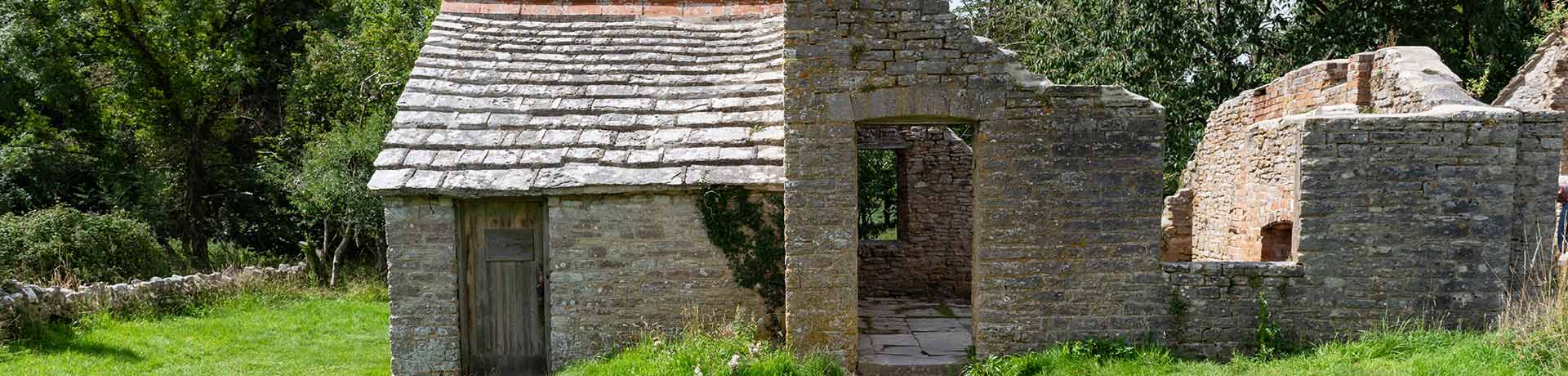
Tyneham Village
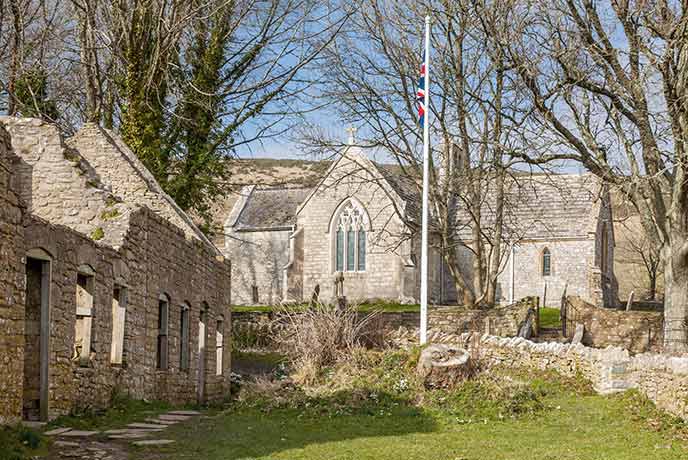
One of the most famous ghost villages in the UK, the otherworldly remains of Tyneham provide a window frozen in time. Once a thriving little community, this countryside haven on the Isle of Purbeck, Dorset, was home to well over 200 residents, with many having lived in the village for generations. On 19th December 1943, all this was to change, when the Ministry of Defence served the villagers with evacuation notices, repurposing the area for military training. Locals were given 28 days to leave, believing they’d one day be able to come back to their homes. Alas, the village was never reopened to its inhabitants, and today its crumbling church, schoolhouse, post office and cottages provide a haunting reminder of a village lost to yesteryears and the community that never returned.
On the church door, a note read: “Please treat the church and houses with care. We have given up our homes where many of us lived for generations to help win the war to keep men free. We shall return one day and thank you for treating the village kindly."
Corfe Castle
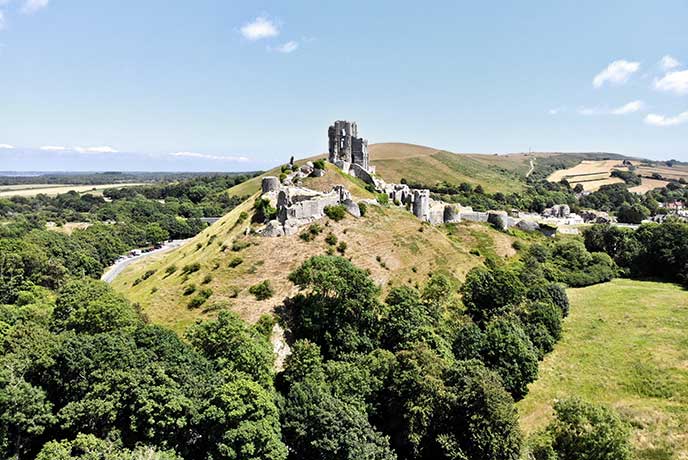
With magnificent views over the Isle of Purbeck, Corfe Castle has been a part of the Dorset landscape for over a thousand years. Founded by William the Conqueror, it was a ruin by 1646 but suffered its fair share of drama over the centuries, including the ill-fated death of Edward the Martyr. But it’s not poor Edward that haunts this place, rather a headless woman in white who flits amongst the wrecked walls and collapsing escarpments, appearing just after sunset. No one is really sure who she is, but legend has it that she betrayed the family during the Civil War by smuggling Parliamentarian soldiers in and causing the devoutly Royalist castle to fall. Other ghostly occurrences include the spooky sound of thundering hooves approaching and a Cavalier, complete with wide-brimmed, plumed hat.
The Mer-Chicken of Portland
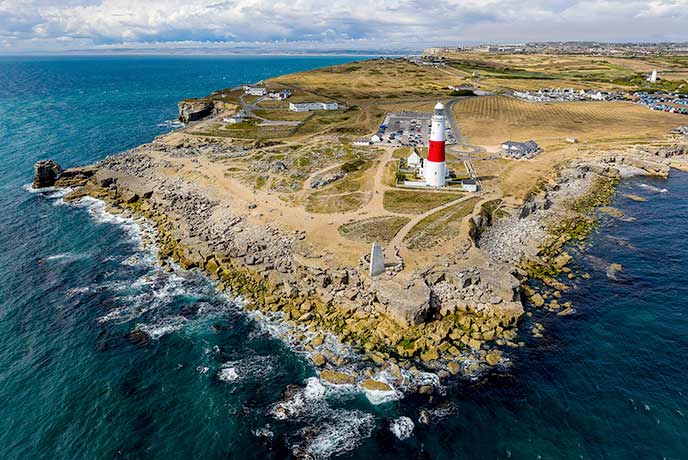
Definitely one of the strangest myths we’ve uncovered, the legend of the Mer-Chicken creature of Portland dating back to a stormy November in 1457. Apparently a half-person, half-chicken with a red beard and legs that were ‘halfe a yarde long’ rose out of the sea around Portland, stood tall on the waves (some say it was the size of four or five men), crowed four times, bobbed his head around the points of a compass, then sunk back into the sea again. Named by locals as the ‘Chesil Beach Monster’, the fabled marine cockerel has reputedly been spotted on several occasions over the centuries, such as in 1757 by a local vicar. Meanwhile, a strange beast washed up on Chesil Beach during the 19th century and was believed to be the infamous Mer-Chicken. It turned out, in fact, to be a washed up camel!
The Cerne Abbas Giant
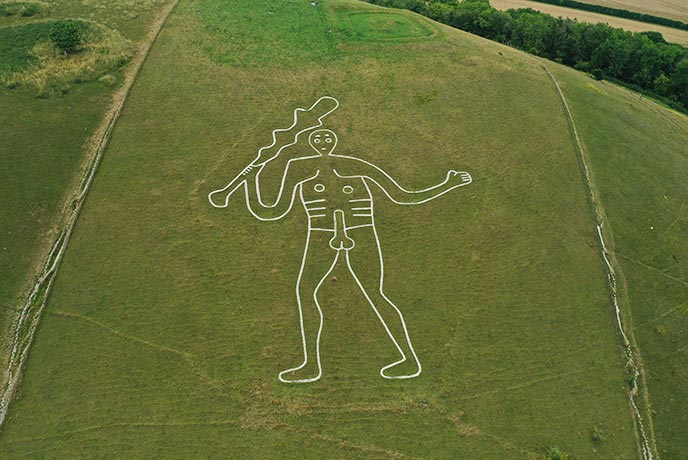
Standing 180 feet tall on the chalky, sun-soaked hill above the sleepy village of Cerne Abbas, the iconic Cerne Giant is Britain’s largest chalk hill figure and most definitely the best known. We don’t really know the origins of the Giant, but needless to say there have been countless theories and debates as to how it came into being. Some say it’s a representative of the hero Hercules, others an ancient Celtic god, while some believe it was designed to mock the Puritan leader, Oliver Cromwell. We do know it was probably made around the late Saxon period, although land surveys don’t record it until the late 17th century. These days, the site is enjoyed for May Day festivities, including Morris Dancers, while women who want help getting pregnant make their way to a certain part of the Giant in the hope that he can help them to conceive.
Trent Barrow and the Bottomless Pit

Head east from the village of Trent near Sherborne and you’ll find a high, eerie spot home to Trent Barrow, an ancient earthworks complete with a small lake, known locally as Bottomless Pit. If local legends have us believe, King Arthur, mortally wounded after his last battle (that some say took place at nearby Badbury Rings), instructed his loyal knight Bedivere to throw Excalibur into the deepest lake he could find. Bedivere dutifully travelled to nearby Trent, found Bottomless Pit, and launched the sword into its dark waters. Years later, when coach and horse companies would compete to get people from one place to another as quickly as possible, one such coach, hurtling towards Sherborne, careered off of the road and plunged into the lake, whereupon all four horses, the carriage, the coachmen and passengers were lost. Even today, on certain nights, people claim to have heard the ghostly pounding of hooves which suddenly go silent and turn the atmosphere cold.
The Tarrant Gunville Vampire

Legend has it that this fearsome creature was William Doggett, the corrupt manservant of the Second Earl Temple who swindled thousands from his absent employer. When the Earl found out, he came home, but before he could be caught, Doggett turned a gun on himself. Not given the right to be buried in consecrated ground, the figure of William Doggett was often seen lurking around the edge of Tarrant Gunville’s churchyard (near Blandford Forum) at night, leaving locals in no doubt he had become a vampire. As it goes, the event shifted into local folklore over the years, until in 1845, when the body of William Doggett was dug up to be moved and was found to be incredibly well-preserved; in fact, his face even had a healthy rosy complexion. To add to the strangeness, his legs had been tied together with recent yellow tape. As was custom, a stake was driven through the heart and nothing has been seen or heard from the Tarrant Gunville vampire since (phew!).
The Singing Marys
On a wild, craggy ridgeway between Weymouth and Dorchester lies a set of five or six (depending on who you believe) long barrows - ancient burial mounds to house our ancestor’s bodies. It is said that at certain times, with no particular common occurrence to explain it, the barrows make strange sounds, which to unaware passers-by sound a lot like singing. No one knows what causes the strange phenomena, but locals have given them the name the ‘Singing Marys’ (possibly a modern take on the word ‘Meer’, meaning boundary mark, which is what they were called in the 18th century). Inspiring writers, poets and musicians alike, not a lot is known about this fascinating place, now a scheduled monument, except that two skeletons were found in one barrow, a male and a female, set in a sitting position with stag antlers on their shoulders.
The marching ghosts of Thorncombe Woods
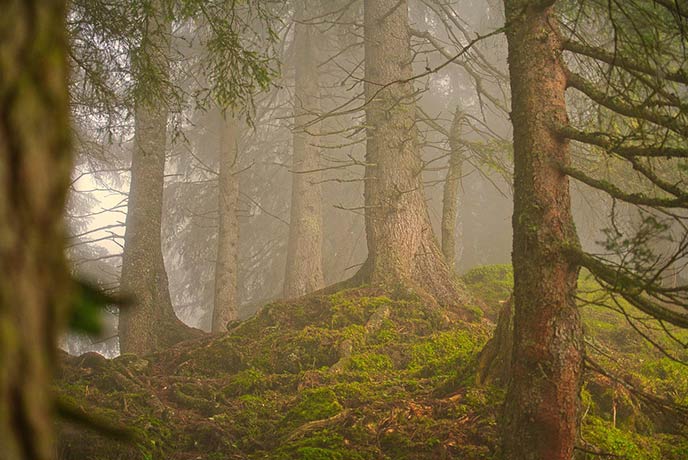
Tucked away on the outskirts of Dorchester and also home to Thomas Hardy’s famous cottage, Thorncombe Woods is a tranquil spot, where the emerald canopies bely a more active past. With more than 66 acres and wildlife reserve designation, it’s hard to imagine that amongst the oak, ash, hazel and beech trees, a Roman road once passed through here, where legions would march their way from settlement to settlement. Numerous sightings of soldiers have taken place over the years, such as in 1661 when two holy men saw a whole cavalry of Romans marching towards Dorchester. In more recent history, a single soldier, complete with helmet, sword and shield was spotted by a group of lads in 1969 (interestingly in the exact spot where the road between Dorchester and Badbury Ring would have run). So should you choose this lovely place to enjoy a sun-dappled walk, keep an eye out – you might just spot something you weren’t expecting!
The Yellowham Woodwoses
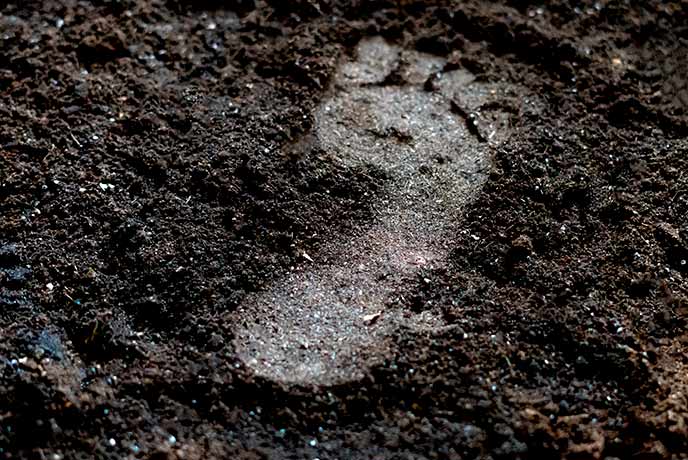
Another wonderful woodland tale, this one takes place in Yellowham Wood near Dorchester, in which the formidable Woodwoses are said to live. Wild, hairy forest folk, these Woodwoses are considered to resemble a smaller version of their American cousin, the Sasquatch (or Bigfoot). Notorious for their fearsome temper, they were said to jump out amongst the trees and terrorise any poor traveller who happened to be walking through the woods, and if you were a young maiden, chances are you’d be stolen away into the heart of the forest. The legend moved from myth to real life when in the 19th century, an unmarried pregnant girl blamed a Woodwose for her condition, causing a local sensation. Even as recently as 2014, the British Bigfoot Research Organisation carried out investigations in the woods, reporting strange noises, answering knocks, stick figures and even a bellowing howl which caused them to run away!
Athelhampton House
Not far from Bere Regis lies the impressive 15th century manor of Athelhampton House. Built in 1485 (but with a dwelling on the site as far back as 1086), this gorgeous stately home is beautiful as you would expect, from its stunning Tudor hall to the Art Deco bedrooms. As befitting a house this age, Athelhampton is reputedly haunted, from a grey lady who floats through the state bedroom in the East Wing and a black-hooded monk who wanders through the gardens, to duelling men in the reading room and a bottle-swigging gentleman in the wine cellar. But the oddest spectral occupant has to be the sad sight of an ape. When its owner, Sir Nicholas Martyn, died in 1595, it is said that the poor creature wandered the halls, rooms and corridors for its master until it pined away. Its restless spirit, unable to find peace, is said to still wander the corridors around the Great Hall.
Feeling inspired to discover the magic of this beautiful county for yourself? Take a look at our stunning holiday cottages in Dorset and start planning your getaway today.