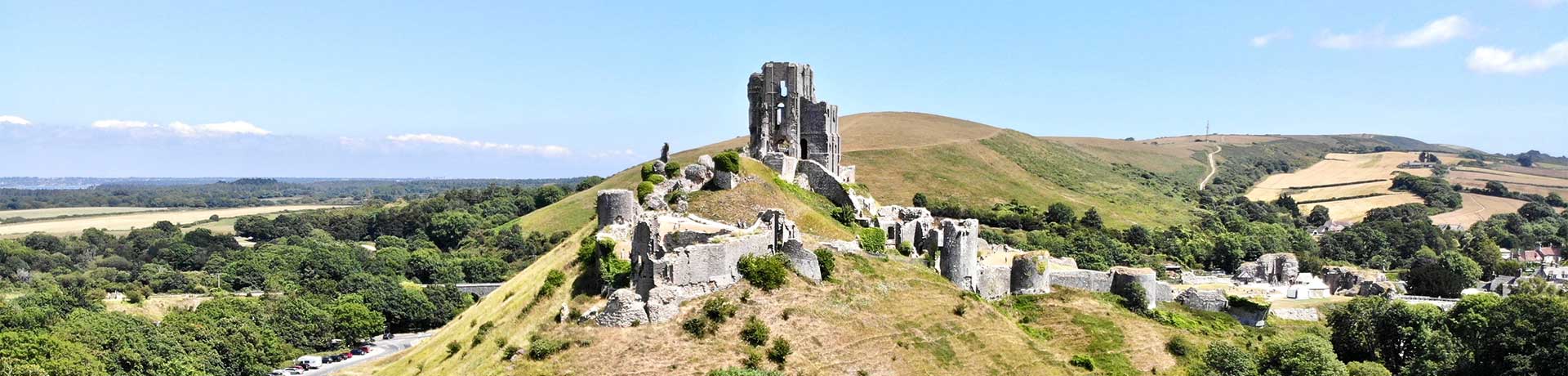
Boasting picture-perfect villages, ancient landmarks, and the world-famous Jurassic Coast, it's easy to see why visitors have fallen hard for Dorset. And if you're a bit of a history buff, you’ll love it all the better because Dorset is jam-packed with sites that stretch from the prehistoric to the medieval and Renaissance. In this scenic corner of England, you'll find everything from dramatic military strongholds that played a key role in the English Civil War to romantic 19th-century structures.
Whether you're interested in military, political or social history, we can all agree that a stomp around a castle is a good place to start. And speaking of stomping, these sites are all smack bang in the middle of some of the best scenery in the county. So be sure to pack your walking boots, as well as your historical guidebook.
Almost all of the sites on our round-up of the best castles in Dorset also have engaging activities or exhibitions for kids, and most have dog-friendly grounds to boot. Oh, and if you’re not the type to pack a picnic on holiday (we hear you), you’ll be pleased to know that all of our favourites boast cafés, tearooms or eateries of some sort. Anyone for a wedge of Dorset apple cake?
Ready to tour the county’s most fascinating forts? Here’s our guide to the best castles in Dorset to get your battlement bucket list started.
Corfe Castle, Wareham
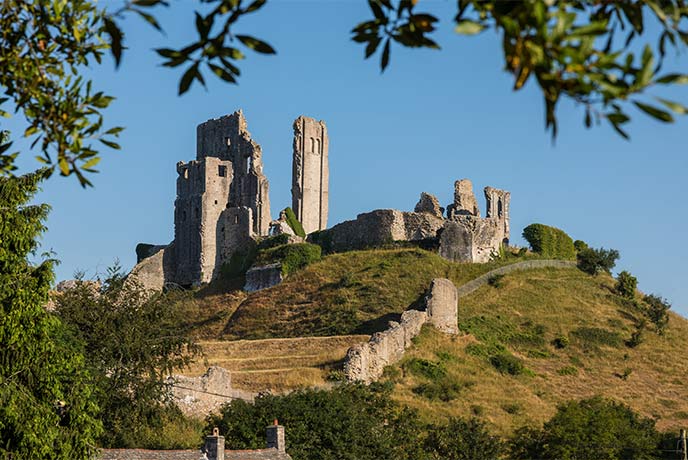
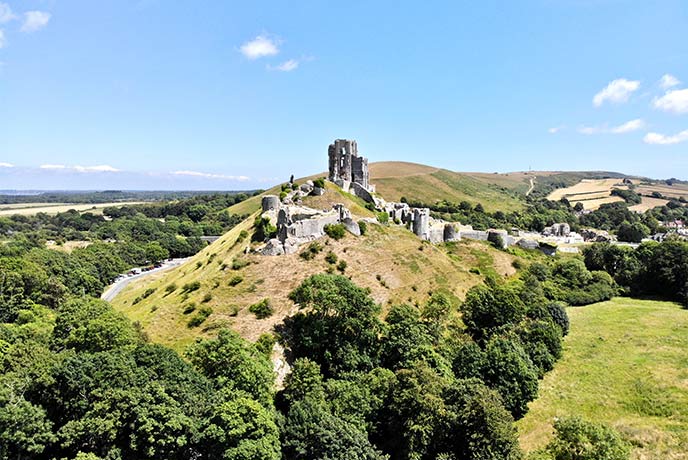
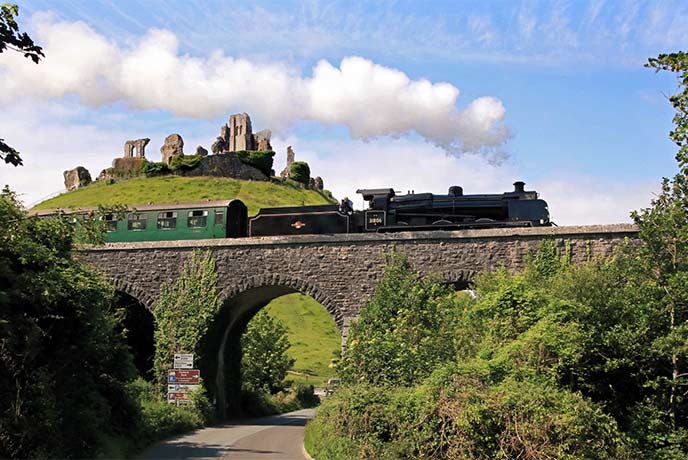
One of the country's most iconic and dramatic medieval ruins, you'll find Corfe Castle towering above Purbeck's skyline. The castle was originally built by William the Conqueror, not long after the 1066 Norman Conquest, as a means to defend their link with the Norman heartlands over the channel.
Over the years, King Henry I added an imposing keep in the early 12th century, and King John reinforced it with defence towers in the 13th century. Later, Sir Christopher Hatton became the first private owner of the castle, before it became the country estate of the Bankes family. But then came the civil war in the 1640s, and Corfe Castle was thrust centre stage in the battle between Parliament and King Charles I. The Bankes family backed the king, but ultimately the castle was partially demolished.
With the power of gunpowder, parts of the castle were pulled to the ground, creating the iconic silhouette that dominates the surrounding landscape today. Eventually, the castle was given back to the Bankes family, who ultimately, in 1982, gave it to the National Trust.
If you'd like to learn more, consider taking a guided tour. These happen most weekdays (outside of school holidays) and even provide access to the Kings' View tower. At the dog-friendly site, you'll find a car park and toilets in the welcome centre. There's also a quaint 18th-century tea room, perfect for a light lunch or cup of tea and cake. Don't forget to visit the shop afterwards, the bookshop is particularly good.
If you're looking for something to do afterwards, head 5 miles to the coast and hop aboard the Swanage Railway heritage line for a scenic journey through the Isle of Purbeck.
Highcliffe Castle, Christchurch
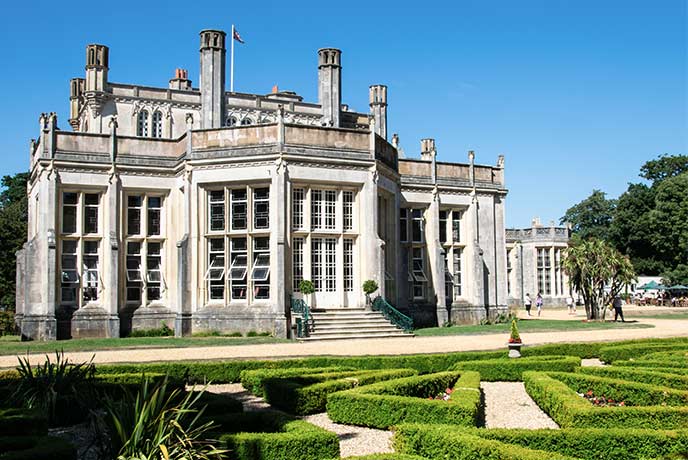
Considered by many to be the finest remaining example of romantic and picturesque design, Highcliffe Castle strikes the balance between might and beauty exquisitely.
Built by Lord Stuart de Rothesay between 1831 and 1836, the castle sits high on the cliffs at Highcliffe, a vantage point commanding sweeping sea views. No expense was spared when creating his vision, with stained glass and masonry shipped across the channel, and he even employed French workmen to fit the tiles, oak and gilt panelling.
Once finished, the castle was filled to the rafters with valuable artefacts, including notable paintings and 18th-century furniture. None of his children had children, so the castle was passed on to a cousin before being sold in 1950, when it became a children's home, followed by a base for training priests.
Sadly, in the 1960s, a fire ravaged the building, and it lay in a state of increasing decay for several decades before the council - with English Heritage funding and two National Lottery grants - restored it to its former glory. These days, as well as welcoming visitors to explore inside, it's hosted The Antiques Roadshow, starred in ITV's Mr Selfridge, and provided the backdrop to many happy weddings.
After you've finished exploring the interior (and marvelled at the 30ft high stained glass Jesse window in the Great Hall), head outside and explore the scenic grounds. Or why not head down onto Highcliffe Beach? This sand and shingle bay boasts views out to the Isle of Wight and Hengistbury Head on a clear day. Feeling peckish? Pop into the tearoom for a light refreshment of a slice of homemade cake.
Afterwards, why not explore the adjacent Steamer Point Nature Reserve? This 24-acre woodland is home to a staggering amount of wildlife. Keep your eyes peeled for woodland birds like woodpeckers and insects such as White Admiral butterflies.
Lulworth Castle, Wareham
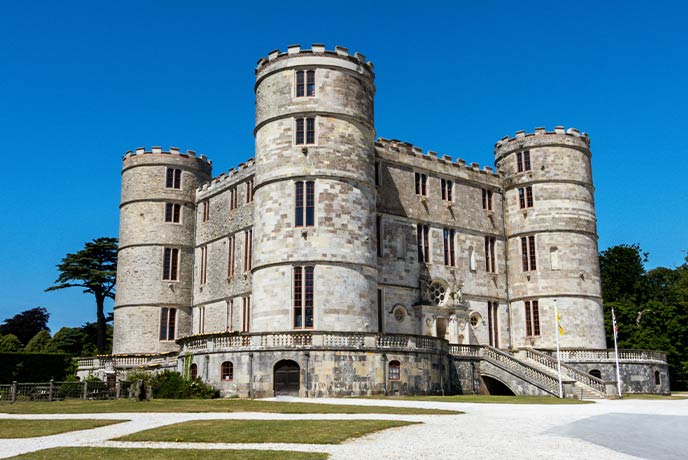
An irresistibly good-looking castle, Lulworth Castle was built in the 17th century as a hunting lodge to entertain the upper echelons of society. It has been home to the Weld family for some 400 years, and they continue to manage the estate to this day.
They did at one point live in the castle, but it was devastated by a fire in 1929. Fortunately, in partnership with English Heritage, it was partly restored and is now open to visitors. Head inside and explore its historic rooms and understand its past as a royal retreat, or explore the Anglican church and Roman Catholic chapel for a glimpse at the castle’s more spiritual side. And whatever you do, don't leave without climbing the tower for spectacular views across the surrounding countryside.
Speaking of greenery, Lulworth Castle is surrounded by manicured grounds, woodland trails, and even a children's playground. The grounds are dog-friendly too, making it the ideal spot for a family day out with your dog.
Tummy rumbling? Head to the basement of the castle, once the servants' hall, and tuck into a sweet treat in the gorgeous little tea room. If you're looking for something more substantial, head to the nearby Weld Arms for traditional meals served in a charming 17th-century thatched inn. There’s a roster of events throughout the year, including Camp Bestival, and the castle closes during the winter, so do check the website and plan accordingly.
Afterwards, head 4 miles to the coast and check out Durdle Door. This natural limestone arch is one of the county's most photographed landmarks. You'll see why when you get there - it even starred as a filming location in the 2015 adaptation of Far From the Madding Crowd.
Not done exploring? Trek a mile up the coast to Lulworth Cove, a unique horseshoe-shaped bay formed at the end of the last Ice Age when the dual forces of sea and river expanded by melting ice. Craving a seaside escape? Check out more of the best beaches on the South West Coast Path.
Sherborne Castle and Gardens, Sherborne
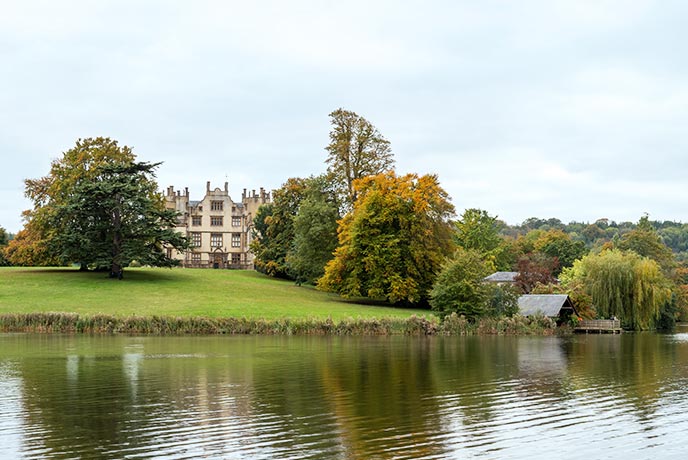
Peruse priceless art, learn about Sir Walter Raleigh, and admire Capability Brown’s iconic landscape with a visit to Sherborne Castle. To get the best out of your visit, time it right and take a one-hour guided tour, which you can book in advance.
There has been a castle of some description in Sherborne since the 12th century, and Sir Walter Raleigh, one of the most famous explorers of Elizabeth I's reign, acquired it in 1592. After first trying to modernise it, he started to build a new house on the site of the Hunting Lodge instead. Over the years, it has had several major transformations. Most notably, in 1617, it was acquired by the diplomat Sir John Digby, who promptly added four wings to the building, each finished with a hexagonal turret.
But it wasn't all Grand Designs and plain sailing for the castle. During the Civil War, the Old Castle was subjected to two sieges, the latter of which demolished it. You can visit the atmospheric ruins now, just a short stroll from Sherborne Castle.
Back at Sherborne Castle, in the 18th century, the Digby family set about a period of modernisation, adding Georgian sash windows, white marble fireplaces, and coveted furniture. But the cherry on top came when they commissioned the UK's most famous landscape designer of the time, Capability Brown, to install a lake and then landscape the gardens.
The impressive dog-friendly gardens remain a huge draw with locals and visitors alike. To best soak them up, take one of the trail walks, which will help you explore the 42 acres of gardens and pleasure grounds, and enjoy sweeping views across more than 1,000 acres of parkland as you go.
If all that walking drums up an appetite, head to the aptly named Walled Garden Restaurant, where you can enjoy lunch with a delicious glass of Sherborne Castle Brut.
As with many of Dorset’s castles, Sherborne Castle is seasonal, so do check their website for up-to-date opening hours.
Brownsea Castle, Brownsea Island
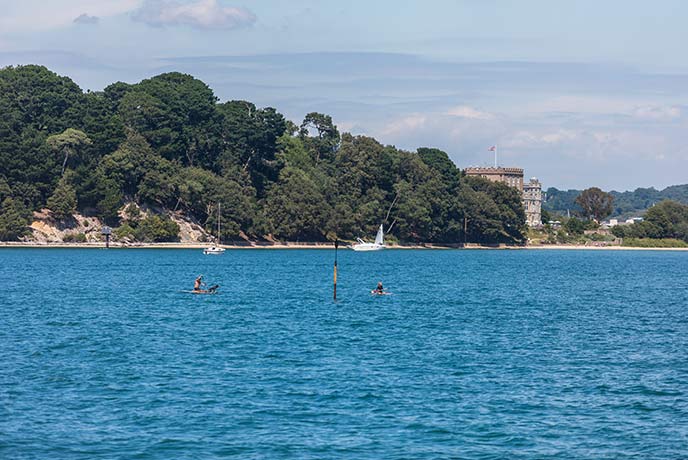
Fancy arriving at a castle by boat? Brownsea Castle on Brownsea Island is a mere hop, skip, and a foot ferry away. Or, you can make your way to the picturesque island via your own boat, kayak, or paddleboard.
Surrounded by a blend of natural beauty and unique heritage, Brownsea Castle boasts a rather fascinating past, from naval defences and piracy to civil wars and grazing pastures. While you can't typically tour the interior, the National Trust occasionally offers historical walks that include special access to the castle. Even if you can’t peek inside, it’s worth a visit just to gaze at the exterior and imagine the many lives and tales that have unfolded in and around it.
Once you’re done taking in the castle, it’s time to explore the natural environment on the island. Boasting heathlands, woods, and a lagoon, it's a dream for overwintering and summer nesting birds. But above all, it's famous for its rare red squirrels and is one of the best places to see them in the country. There are daily guided tours and even a Squirrel Shuttle mini bus tour, so everyone gets a chance.
Head to the visitor centre to dig even deeper into the island's wildlife, or pop along to Villano Café and Trading Post, a handy harbourside café serving lunches, cakes, and ice cream.
As a nature reserve, dogs are not allowed on the island aside from assistance dogs.
Portland Castle, Castletown
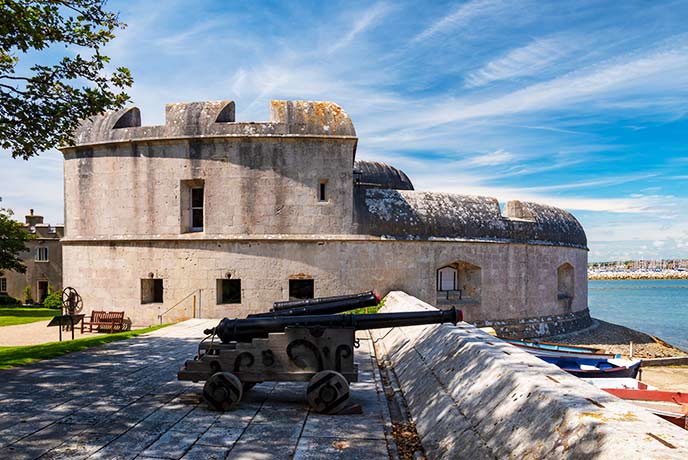
Henry VIII built Portland Castle to defend against the Spanish and French invasions. The coastal artillery fort, on the Isle of Portland, is characterised by its squat form and fan-shaped design, designed to divert any attacking cannon shots.
Just two storeys high, the dense-looking fortress is constructed with local ashlar Portland stone and is widely considered to be one of the best preserved device forts in the country.
Visit today and explore the castle's 450-year history and learn about the vital roles it's played in the nation over the years. It sided with the King during the Civil War and held out against Cromwell for a while before being captured by Parliamentarians in 1643. It also served as a prominent naval base during the First World War and was used as military accommodation and a store in the Second World War.
You can take a deep dive into its history on your visit through its interactive exhibits and audio tour. Be sure to check out the Tudor kitchen to understand how staff fed the troops, then head to the gun room and check out the five gun casements (not to mention the jaw-dropping views down the coast).
Visiting with the kids? Head to the armoury and dress up as a Tudor soldier or royalist gunner. Or enjoy some Tudor-style entertainment with a game of Nine Men's Morris.
After all that fun, it's the Captain's Tearoom you'll want. Try a cream tea with homemade scones, tuck into a freshly made sandwich or treat the kids to a children's lunch bag.
Spend the rest of your time on the Isle of Portland trying your hand at watersports (anyone for dinghy sailing?), fossil hunting in quarries or going bird watching at The Fleet Lagoon. Keep your eyes peeled for little terns, spoonbills and cormorants.
Keen to explore these magnificent forts in real life? Browse our collection of holiday cottages in Dorset and start planning your next historically inspired getaway today.