With its famous scenery, dramatic clan history, castle relics and world-class whisky distillery tours, Scotland is one of the most romantic destinations to visit in the UK. But perhaps the jewel in its crown is the abundance of wildlife to be found within its breathtaking landscapes.
Wilderness lies at the core of Scotland and is the beating heart of the nation, with towering mountains, lush forests, and almost 12,000 kilometres (7,400 miles) of coastline making it one of the world’s most beautiful destinations.
These panoramic vistas, dominating sea cliffs, glassy lochs and verdant valleys provide a haven for over 90,000 wildlife species across land, sea, and sky – including everything from elusive wildcats to giant whales and majestic eagles.
Whether you’re going on an island-hopping adventure exploring its remote outposts, hiking through the dramatic Highland scenery or exploring its stunning coastline via the NC500 route, Scotland delivers exceptional wildlife encounters wherever you go.
Scotland’s ‘Big Five’
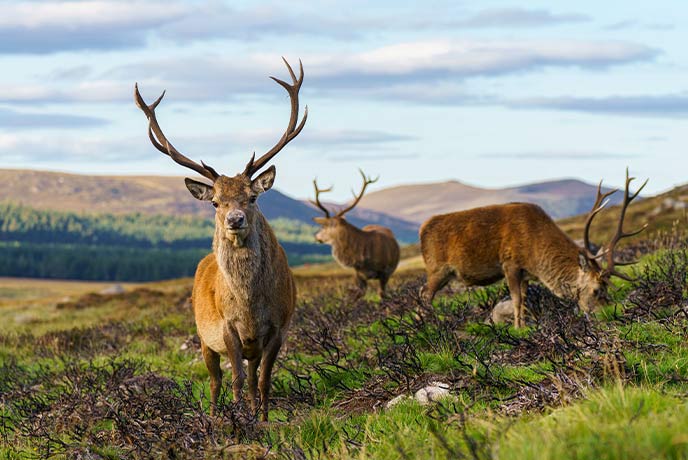
There’s no better place to start than with Scotland’s ‘Big Five’ – a collection of the country’s most beloved native wildlife species.
Golden eagle
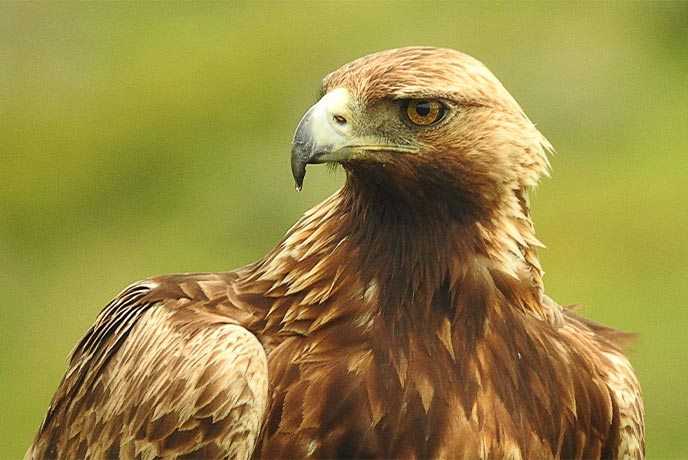
A magnificent apex predator, with a wingspan of up to 2.5 metres, golden eagles are best spotted on the Scottish Isles and Highlands. There are over 500 breeding pairs in the country, mostly found in the countryside hunting for rabbits and hares, although they’ve also been known to catch foxes and young deer. They are masters of stealth, with eyesight up to eight times sharper than humans, and diving speeds of up to 200mph. Keep an eye out for golden eagles soaring near rocky cliff faces where they are known to breed, or near remote glens. You can recognise them by their dark plumage and golden heads.
Red deer
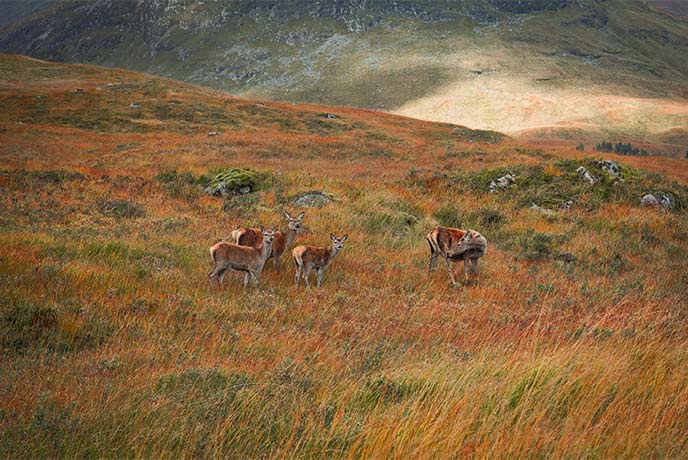
Britain’s largest land mammal, Scotland’s red deer can reach shoulder heights of 1.4 metres, with their large, branching antlers adding significant additional stature as they grow older. In autumn months, during the rutting season, males fight over females and can be heard roaring from up to 2 miles away. The best places to spot red deer are on moorland and mountainsides, along with grasslands and woodland. They are distinguishable from Scotland’s other deer species by their russet brown fur, which shines in shades of gold when bathed in sunlight.
Common seal
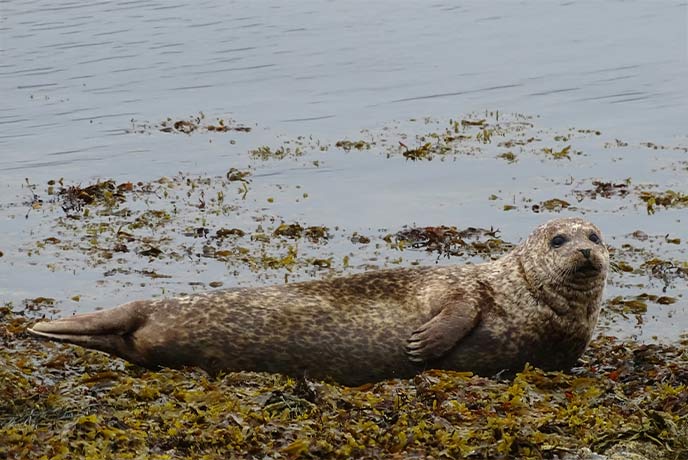
Head to Scotland’s coastline for a chance to see the adorable common seal, which, despite their name, are actually less common than grey seals in UK waters. Colonies haul out at the foot of the cliffs and on quiet beaches, adding excitement to many of Scotland’s coastal walks. The Hebridean Islands (including Colonsay and Benbecula) are a fantastic place to discover seal pups relaxing on the shore, though it’s advised to keep your distance so as to not startle them.
Otters
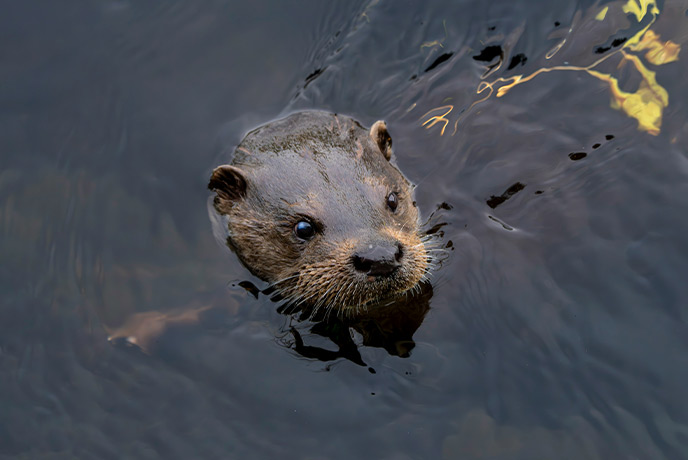
Perhaps the cutest of Scotland’s ‘Big Five’, otters are somewhat elusive, but it’s still possible to spot them along rocky coastal shores, camouflaged amongst seaweed and playing in the waters of the sea lochs. The Shetlands and Hebridean islands are otter-approved hot spots, with otter-watching tours with various local guides improving your chances to see these adorable aquatic animals in the wild. If you’re looking independently, dawn and dusk are the best time to see otters living in freshwater lochs and rivers, while coastal otters are often seen hunting for small amphibians and fish during the daytime.
Red Squirrel
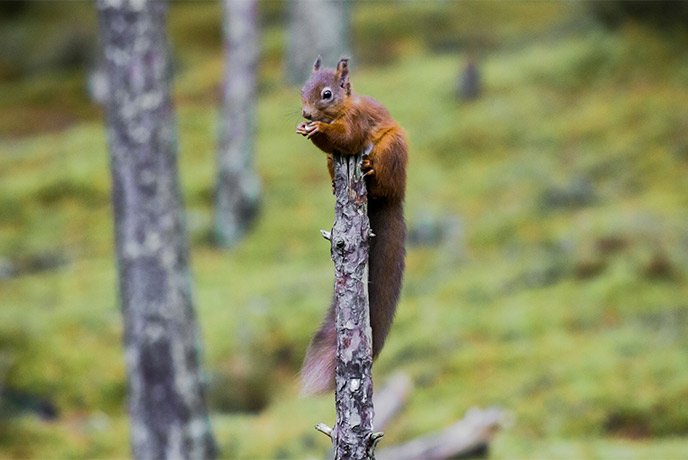
Scotland is home to around 80% of the UK’s red squirrel population, which are instantly recognisable by their tufted ears and bright red fur. Their favoured habitats include coniferous woodlands, where they can forage for hazelnuts and nest in the tree canopies. Make your way to forests and woodlands in Galloway, Argyll or the Highlands for the best chance at an encounter and report sightings via Saving Scotland’s Red Squirrels to help with conservation efforts. Scotland’s red squirrels face the same threat of disease and habitat loss from grey squirrel populations, which has led to dwindling numbers in the rest of the UK, making them a precious species protected by law.
Coastal wildlife
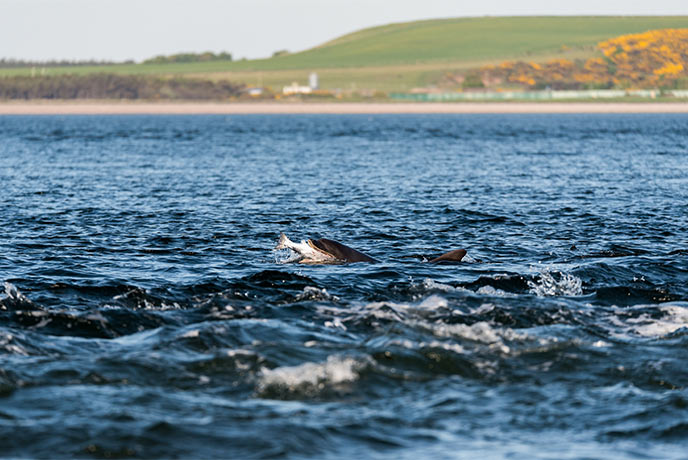
If you’re planning on spending time by the coast, Scotland is an incredible destination for seeing large sea life and cetaceans.
From spring to autumn, boat trips navigate the Hebridean Isles (part of Argyll and Bute), where basking sharks (the world’s second-largest fish) are known to frequent. You can join a wildlife-watching boat from Oban or the Isle of Mull.
There’s also a good chance of seeing minke whales, which reach up to 9 metres in length and are recognised by their small dorsal fins.
Bottlenose dolphins are regularly seen, known for their inquisitive personalities and riding the bow wave of the boats, with the largest pods based around the Moray Firth. These same waters are also popular with harbour porpoises, which favour shallower depths and bays.
For a truly spectacular wildlife watching experience, Shetland, Orkney and Scotland’s north and west coasts are visited by orcas from May through to September. You can join orca tours from Orkney, Shetland, and the Isle of Lewis.
Birdlife
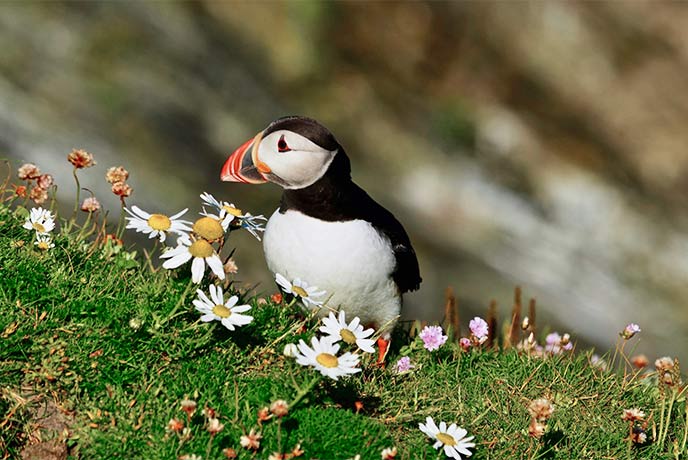
Scotland is an internationally important nesting ground for seabirds, thanks to its remote islands, rocky outcrops, and towering cliff faces. Millions of breeding pairs head there each year, making the country a fantastic birdwatching destination.
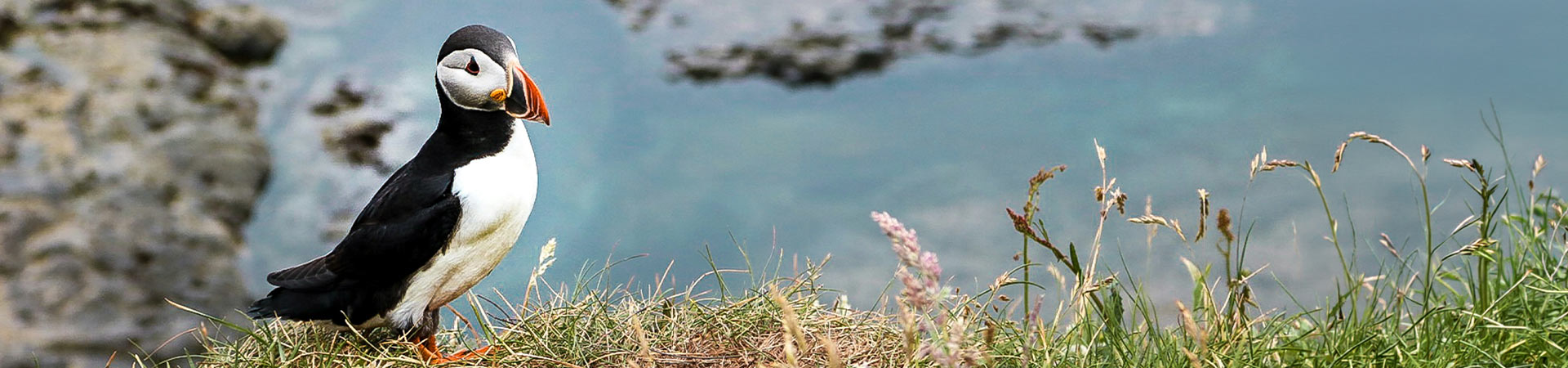
Amongst fan favourites are puffins, known for their clumsy movements, orange legs, and oversized beaks. Best seen on grassy clifftops between March and August, puffins are most common in the Hebrides and can be seen flying food back and forth to young chicks before they head back to the open ocean.
Their close cousins, razorbills, are often seen sharing the same nesting sites as them, and are distinguishable by their black beaks with a white stripe down the side.
Between February and October, gannets (one of the largest seabirds in Britain) can be seen diving into the waters off the Scottish coast, and have large colonies on the Northern Isles. Other seabirds to look out for include terns, skuas, and guillemots, as well as wading birds like oystercatchers, lapwings, redshanks and plovers in tidal habitats.
Perhaps the most magnificent of Scotland’s coastal birds is the white-tailed eagle, not only because it is the UK’s largest bird of prey (with a 2.5 metre wingspan) but also because of the conservation efforts to reintroduce them. Once hunted to extinction, there are now around 100 pairs, which glide along the Scottish coastline hunting for fish and small birds, especially along the western coast and throughout the Hebridean Isles.
Away from the coast, the Cairngorms and Galloway National Park are hotspots for black grouse, known for their spectacular mating dances, and the rare red kite can be seen along the Galloway Red Kite Trail.
Mammals
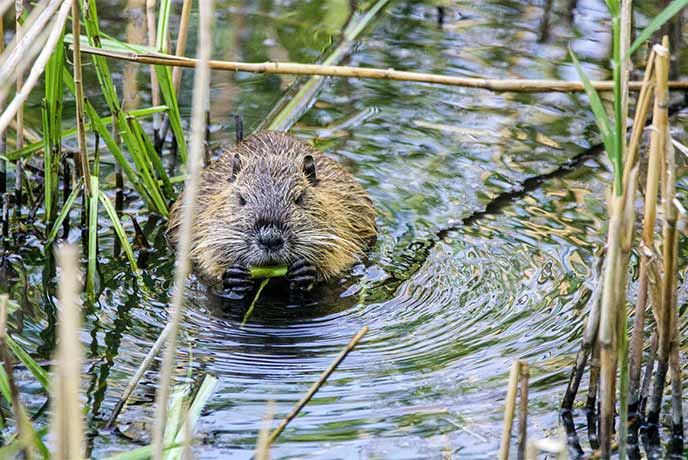
Beyond its majestic deer populations, Scotland is home to dozens of land mammal species, including some rare varieties you won’t find elsewhere in the UK.
In the Scottish Highlands, pine martens (a relative of the weasel) grow to the size of cats and live within native woodlands or can be seen slinking along rocky hillsides. Once near-extinct, these omnivores were given legal protected status in the 1980s, and numbers are back in the thousands.
Eurasian beavers are making a comeback too, after being hunted to extinction in the 1500s. Thanks to conservation efforts, small populations have been reintroduced to Knapdale Forest and Loch Lomond, where they help to sustain wetland habitats for other wildlife to flourish in. For the best chance of a sighting, plan your visit at dusk or dawn and consider a tour with Perthshire Wildlife.
Perhaps the most sought-after wildlife sighting in Scotland is the elusive wildcat, whose numbers are thought to be in the low hundreds. A truly rare species, these gorgeous felines are most active in the winter and early spring, in the most remote parts of Scotland.
Other more common land mammals throughout the country include the beautiful red fox, common badgers, and grey squirrels. Highland cows are also frequently seen grazing the Highland fields and roadsides.
Flora
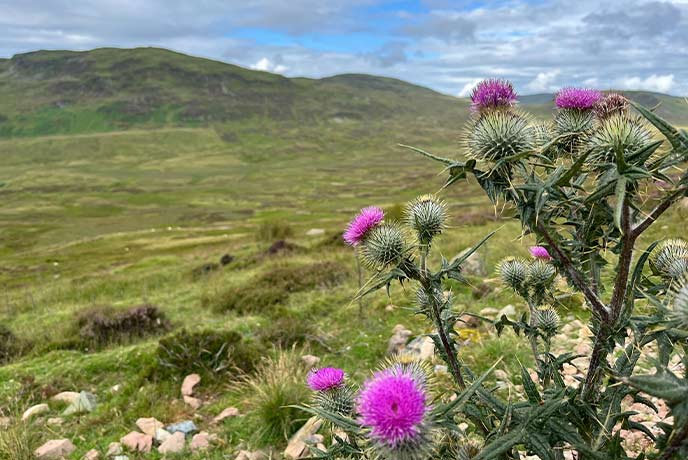
Not to be forgotten are the beautiful plant species that scatter the Scottish landscape, including small forests of Scots pine, vast carpets of purple heather, and the Scottish bluebell, which brings bursts of colour to woodland floors.
Scotland’s grasslands are alive with wildflowers during the spring and summer, while over 12,000 species of fungi can be found in woodland habitats.
In the mountains, hardy alpine blooms grow tucked beneath rocky ridges alongside moss and lichen.
Scotland’s rarer plant life includes the Scottish primrose, which grows only on the coastline of northern Scotland, and the delicate Twinflower, which grows only in the native Caledonian pine forests.
The Caledonian pine forests, which once covered large parts of Scotland, are now in decline, with small pockets still providing a vital habitat for many plant and animal species. The best areas of these ancient pinewoods are protected on Scotland’s National Nature Reserves, which are carefully managed so you can visit without having a negative impact on wildlife and biodiversity.
Ready for the ultimate wildlife watching adventure? Browse our collection of self-catering holiday cottages in Scotland - and don’t forget your binoculars!