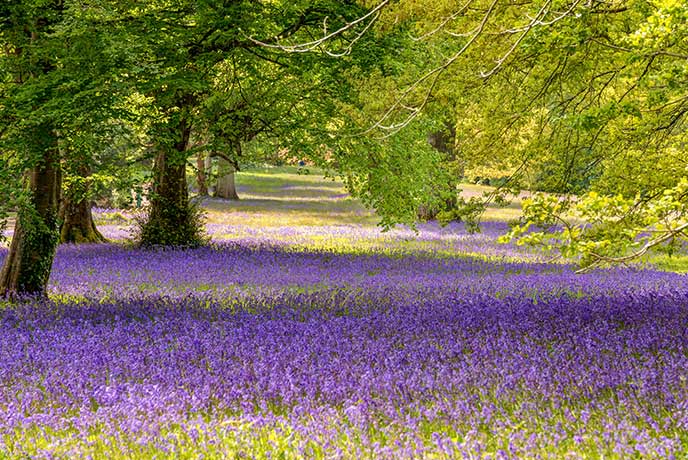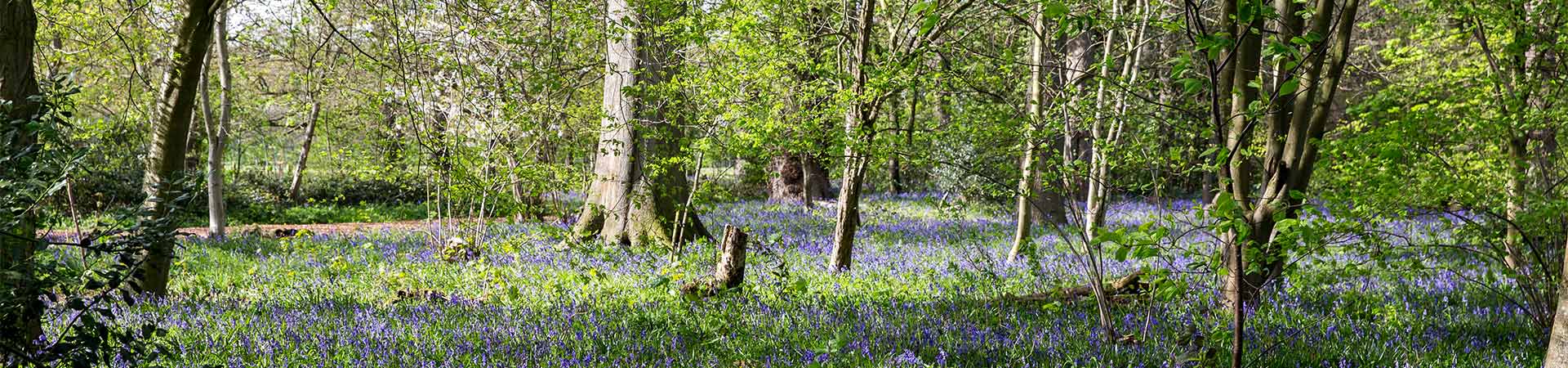
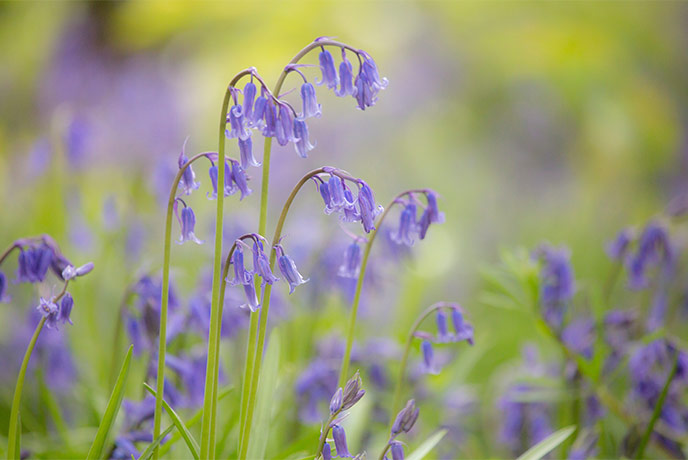
Nothing quite heralds the arrival of spring as delightfully as our native bluebell. As a singular plant, it’s a delicate flower with drooping mauve flowers and tendril-like leaves. En masse, however, they provide a stunning swathe of lilac-blue, generally carpeting dappled woodland and hugging country lanes and riverbanks.
For Yorkshire, the best time to see this spectacular display is from mid-April onwards, with early May being the peak time, depending on the warmth of the weather. Of course, it's not just us nature-loving humans that enjoy the bluebell show. You’ll often see butterflies (such as the speckled wood butterfly and the orange tip) flitting amongst the flowers, while wild garlic, foxgloves, and even purple orchids can be seen nestling alongside bluebells. If you’re really lucky, you may even spot a rust-red Roe deer.
If you’re a keen photographer or just want to get that perfect Instagrammable shot, the best time for photographing bluebells is generally when the sun is low, so early morning for a soft light, or late afternoon for that golden glow.
For whatever reason you seek solace among these much-loved flowers, here are our top bluebell woods in Yorkshire for you to discover.
Hardcastle Crags, Hebden Bridge
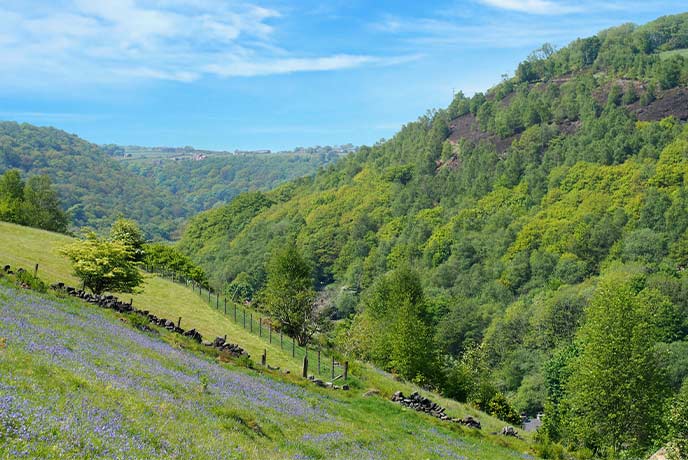
Nestled in the South Pennines lies 400 acres of unspoilt woodland, Hardcastle Crags. Named after the rocky outcrops that form part of Hebden Water near Hebden Bridge, the area has been used since the Middle Ages for farming and manufacturing, most notably textile production during the 18th and 19th centuries.
Today, it’s a fascinating spot to learn about our industrial heritage, while a walk up Hardcastle Crags in spring will find the woodland carpeted in bluebells, combined with absolutely stunning views, earning the spot as one of the best places to see these spring flowers in the UK. There are over 15 miles of footpaths to explore, with different trails and walks of varying lengths and strenuousness. The riverside walk will offer the best bluebells, with the 19th-century Gibson Mill well worth a visit too. Managed by the National Trust, there’s parking, toilets, a café and bookshop.
Nidd Gorge, near Knaresborough
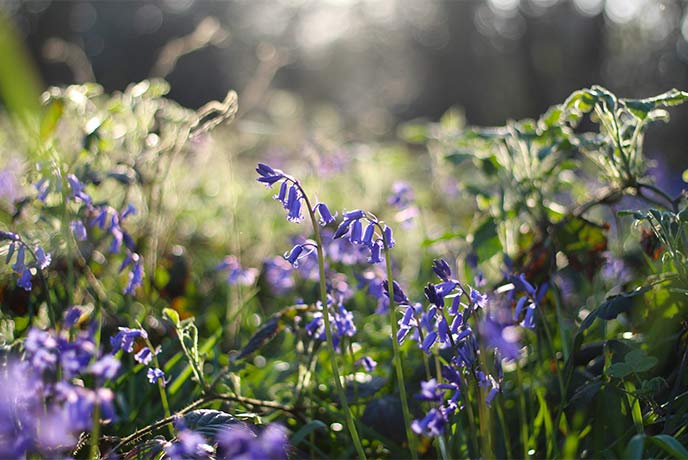
The steep and beautiful Nidd Gorge boasts 114 acres of ancient woodland that in spring flushes deep violet with bluebells, perfect for a relaxing walk on a sunny day. Lining either side of the River Nidd that runs east to west at the base, Nidd Gorge is actually five different woods: Coalpits Wood, Bilton Banks, Spring Wood, Scotton Banks and Gates Wood. It boasts a rich history that can be seen by the occasional glimpse of relics dating back to the Iron Age.
A haven of broadleaved trees, it’s also home to over 20 species of animals, including Roe deer, herons, kingfishers, tawny owls and woodpeckers. There’s also a great adventure trail that little ones will love. Nidd Gorge has a car park, an information board, and lots of footpaths to follow. You’ll find a pedestrian bridge going over the river and lots of different trails to follow, including the ‘Castle to Castle’ trail that runs between Ripley Castle and Knaresborough Castle.
Beningbrough Hall Woods, York
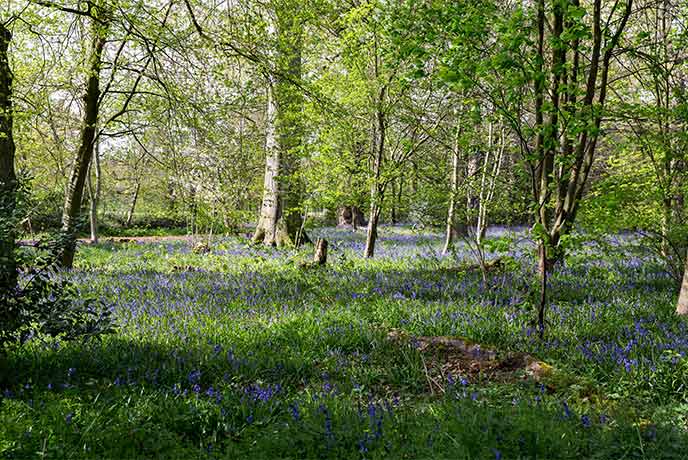
Beningbrough Hall is a stunning 18th-century stately home that oozes Baroque charm. Today, the hall, close to York, is a space for traditional and contemporary art, while outside there are stunning gardens, including a kitchen and Mediterranean garden. Within the extensive grounds, there are some beautiful walks and trails to follow, and should you visit during spring, you’ll find the floor bedecked with bluebells as you meander alongside the River Ouse and through the idyllic woodland.
The Beningbrough river and woodland walk is probably your best bet for optimum bluebell spotting – it’s a lovely circular trail (follow the yellow markers) that’s about 3.5 miles long, winding along narrow pathways that are mainly flat but with some steeper inclines. It’s a fab walk for the whole family (and your four-legged friend, but please keep them on a lead). There’s a fantastic wilderness play area for little ones and a picnic area, should you bring your lunch with you.
Hackfall Wood, near Marsham
The beautiful Hackfall Woods in the Yorkshire Dales appear to be one of nature’s stunning creations, but it is, in fact, very much manmade, dating back to 1731. Although made increasingly popular later on as a place to visit by the Victorians who loved to amble beneath the canopies (to the point that William Wordsworth mentions it in one of his guidebooks), it gradually fell into decline until it was taken over and managed by the Woodland Trust and the Hackfall Trust, who brought it back to life with the help of an £1 million grant from the Heritage Lottery Fund – it’s even won European prizes for its cultural heritage.
Today, it’s a wonderful free place to roam, complete with ruins, waterfalls, grottos, glades and follies to explore that also happen to be where most of the glorious bluebells tend to congregate. There’s a clear circular path to follow, complete with signposts, and a car park too.
Skipton Castle Woods
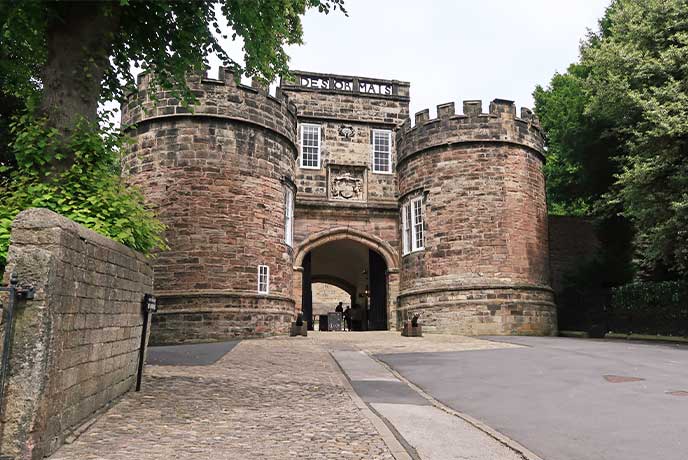
At 900 years old, Skipton Castle is a stunning example of medieval architecture, and the surrounding woodlands are equally rare and precious. Located just off the high street in Skipton, the woods offer 37 acres of broadleaved woodland to explore, but is most famous for its cacophony of spring flowers that draw visitors from all over. Managed by the Woodland Trust, Skipton Castle Woods in spring is blanketed with bluebells that can be seen from well-surfaced paths that meander through the woods.
Although none of the paths are step-free, some routes have fewer steps, making it easier for those with limited mobility, and there are benches throughout should you wish to have a break and soak up the tranquil atmosphere. And look out for wildlife – these woods are well-known for their birds of prey such as buzzards, red kites, and sparrowhawks. If you’re extra quiet, you might even spot a deer or two.
Roseberry Topping and Newton Woods, North York Moors
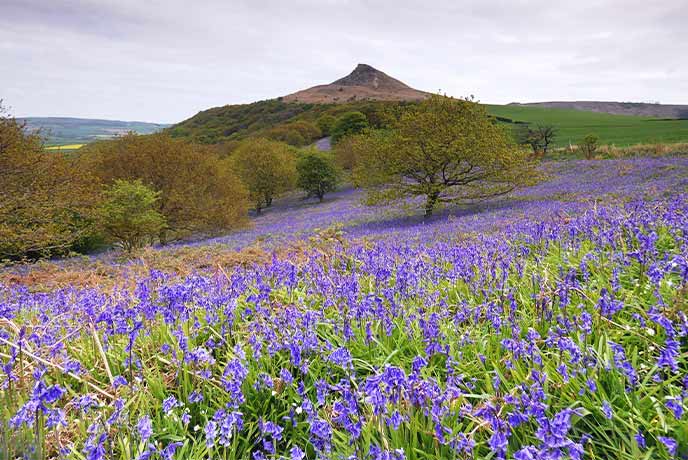
The distinctive Roseberry Topping on the North Yorkshire Moors, about half an hour’s drive from Staithes, has been likened to the Matterhorn in Switzerland for its unusual shape that juts out over the countryside. Said to have inspired the explorer Captain James Cook, the hill is 320 meters tall and a fab spot for epic views, which, if you’re visiting in springtime, you must combine with a wander through Newton Woods below, where you’ll find the floor blanketed in a mauve swathe of bluebells.
At their best from April to early May, the bluebells of this ancient woodland share the land with glorious oak and ash trees, but it’s the majestic backdrop of Roseberry Topping that makes this walk extra special, and you’re guaranteed some jaw-droppingly beautiful photos with the bluebells in the foreground and the hill in the distance. There’s a car park on site as well as a toilet.
Bolton Abbey, Skipton
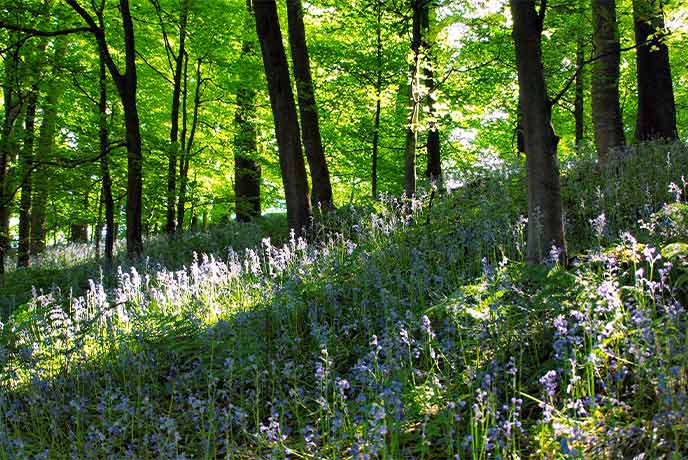
Bolton Abbey, named after the ruined 12th-century Augustinian abbey near Skipton in North Yorkshire, is a spectacular estate of over 30,000 acres with miles of walks amongst the beautiful natural surroundings. An important Site of Special Scientific Interest (SSSIs), with moorland, rivers, and woodland to explore, you’re spoilt for choice as to where you wander.
In spring, head to the magnificent Strid Wood where the vibrant colour of the bluebells mingle with the heady scent of wild garlic. One of the largest sessile oak woods in the Yorkshire Dales, Strid Wood meanders alongside the River Wharfe and offers a dappled haven for a lovely spring amble. As you walk, keep an eye out for roe deer, kingfisher, otters and greater spotted woodpeckers. There are several car parks, a tea room, a restaurant, and you can even have your own BBQ in Barden Field car park if you’re visiting on the weekend or on a Bank Holiday.
North Cliffe Woods, Market Weighton
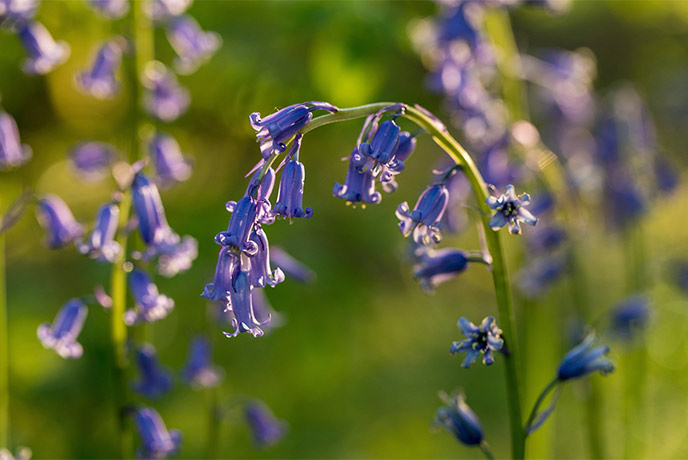
This pretty nature reserve comes alive in a purple haze of bluebells in spring. A walk around the 3km grass footpath trail on a sunny day will find you bathing in their stunning colour, accompanied by the sweet sound of songbirds – listen out for willow warblers, woodpeckers, chiffchaff and blackcap, as well as the much-celebrated return of the woodlark. You might also spot a sunbathing grass snake or two on your path if you’re lucky, and damselflies and dragonflies in the heathland, alongside Hebridean sheep, which graze the land in the spring to allow new growth to spring up.
As this is a nature reserve, please note that this isn’t a walk for your four-legged friends, and if it’s been raining, it’s best to bring wellies with you. There’s a mobile café on site Tuesdays to Sundays, while toilets can be found at the neighbouring nature reserve, North Cave Wetlands, 2 miles away.
Nostell Priory, Wakefield
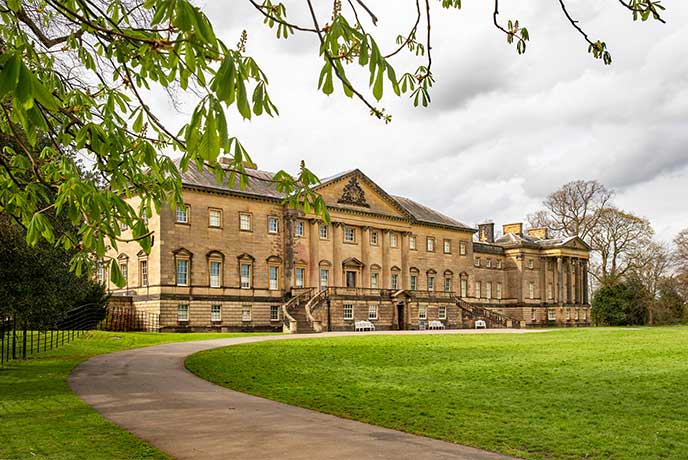
Nostell Priory, a beautiful Georgian house with 300 acres of parkland and gardens, is the perfect place to visit in spring when its ancient woodland (called Engine Wood) is blanketed in bluebells. Once you’ve explored the fascinating house, pull on your boots and make your way into the leafy wonderland to walk amongst May’s most famous flower. Should you have little ones with you, they’ll love the woodland play area, while older kids can be let loose on rope bridges and a 30-meter zip wire.
In addition, there’s a fantastic Wellness Trail that snakes its way along the lakes and in the woods with benches on which to sit and practice mindful activities to help you appreciate being in the present. With all that healthy activity and basking in the glow of the bluebells under your belt, head to the tea room for refreshments and a well-deserved rest. The house, gardens, and wider estate are all managed by the National Trust.
Feeling inspired to see these blue beauties for yourself? Take a look at our stunning holiday cottages in Yorkshire and start planning your spring getaway today.